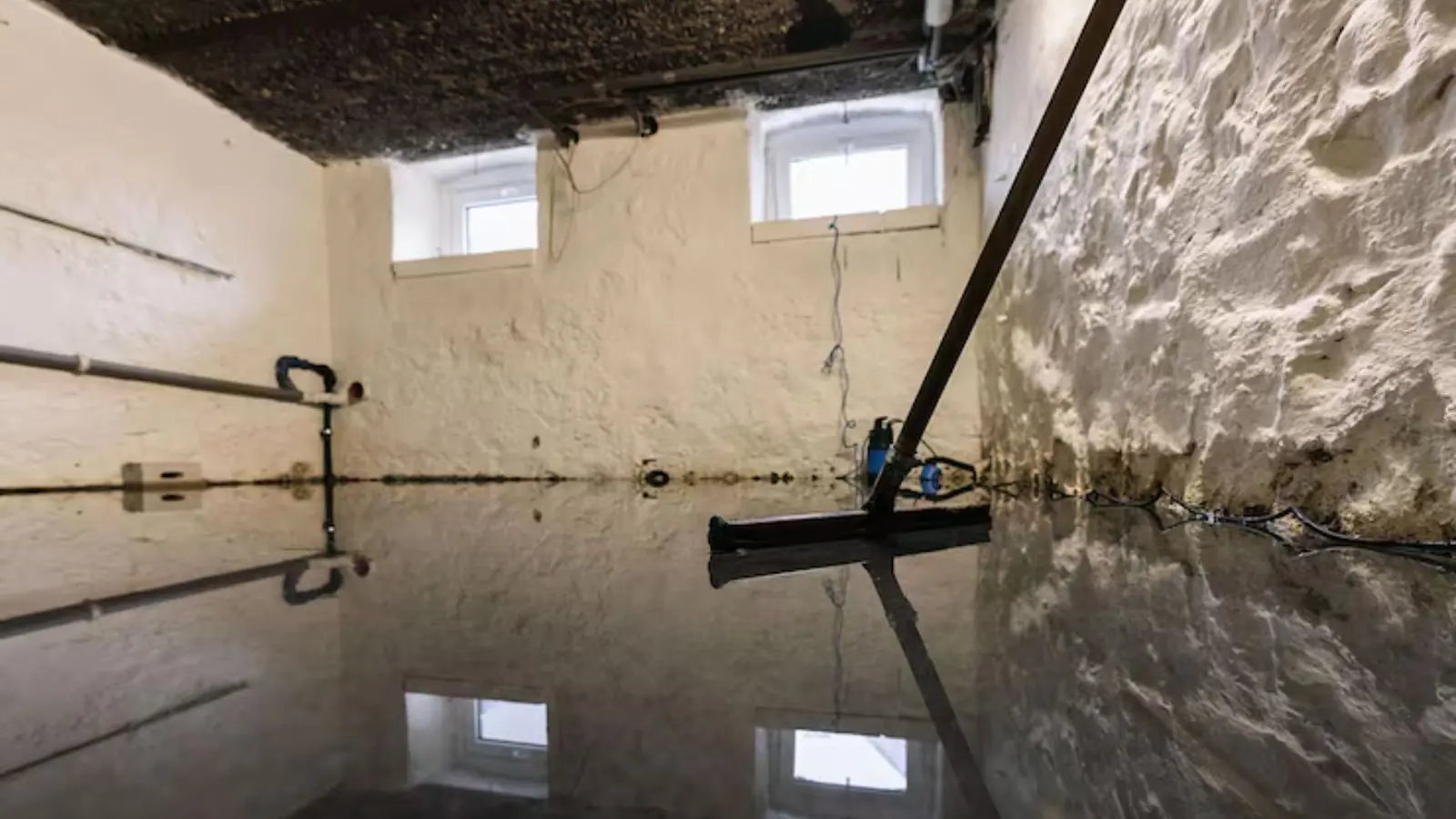
Professional flood cleanup services for a basement or other low space remove standing water with pumps and extraction units, take out materials that cannot be saved, dry the structure with air movers and dehumidifiers, and sanitize what is left. Floodwater from outside is treated as contaminated, so porous items like carpet, pad and lower drywall are usually removed rather than dried.
Not every Indio home has a basement, and the city does not publish a count. This guide covers the places water collects instead: a below-grade room, an attached garage, a sunken living area, a crawl space or a utility room that sits lower than the yard. The same services and the same questions apply to each.
Where flood water collects in a home
Use this to see what kind of space you have and what a crew will do there.
| Space | Why water collects | What cleanup involves |
|---|---|---|
| Finished basement | Below-grade walls and floors catch groundwater and runoff | Pump out, remove wet flooring and lower drywall, dry with dehumidifiers, sanitize |
| Unfinished basement or cellar | Slab and walls take seepage, storage gets soaked | Pump out, move or discard storage, clean and dry concrete, treat surfaces |
| Attached garage | Door thresholds sit near ground level, runoff reaches slab edges | Extract water, clean the slab, check the shared wall to the house |
| Sunken room or step-down | Water runs to the lowest floor in the house | Extract, pull flooring, check subfloor and wall bottoms |
| Crawl space | Low area under the floor collects runoff or leaks | Pump out, remove wet insulation, dry framing, check for odor |
| Utility room or laundry | Appliances and floor drains sit at the bottom of the plan | Extract, dry, check for backups from the drain |
Ask the crew to name the space you have, because the drying plan changes with the type of floor and wall.
What a flood cleanup visit looks like
The first visit starts with safety. The crew checks for electrical hazards, gas smells and structural problems before anyone steps in. Standing water is then pumped out with submersible pumps and extraction units, with the discharge routed to a legal location.
Once the water is gone, the crew removes materials that cannot be saved. That usually includes carpet, pad, damp insulation and the lower portion of drywall, cut above the visible water line. The rest of the structure is dried with air movers, LGR dehumidifiers and meters. The full process is described on the flood damage restoration page.
Why floodwater is handled as contaminated
Water that comes in from outside, such as storm runoff or rising groundwater, can pick up soil, fuel, fertilizer and sewage as it travels. Under the ANSI/IICRC S500 standard, that places it in Category 3. Category 3 water means porous materials come out, hard surfaces are cleaned and disinfected, and crews wear protective gear.
A water-supply break inside the house is treated more gently, since the water starts clean. But if it sits for a day or two, or flows across a dirty floor, the category can rise. This is why the first call should describe where the water came from.
Questions to ask a flood cleanup company
These questions sort out good companies from the rest, and none of them need technical knowledge.
- Do you explain the scope and price before work starts, in writing?
- Which standard do your crews work to for water damage? (ANSI/IICRC S500 is the published one.)
- Are you licensed and insured, and does your contractor license cover the construction work if it reaches $1,000 or more?
- What equipment will you use, and how will you track whether the structure is dry?
- What do you do with contaminated materials and wastewater?
- Will you document the loss with photos and moisture readings for my insurer?
- Who handles the rebuild if it is needed, and is that included or separate?
Before you step into a flooded space
Do not wade into standing water if outlets, appliances or the panel are near it. Shut off power at the breaker only if you can reach it while standing on dry ground. If you cannot, stay out and call. The City of Indio storm page tells residents to shut off electricity at the breaker panel if water rises near outlets, and to turn around rather than drive into flooded areas.
Cleanup, drying and when the job is finished
A flood cleanup is not done when the water is gone. The structure may feel dry on the surface while framing and slab hold moisture. A crew checks readings each day, compares them with a dry reference, and removes equipment only when readings are back in range.
After drying, the rebuild starts: new drywall, flooring, trim and paint. The cleaning and sanitizing stage, which sits between extraction and rebuild, is covered on the water damage cleanup page.
Standing water in the house right now? The line is open around the clock.
☎ (760) 769-1159Pumps, not buckets: why extraction comes first
Emergency extraction is the step that stops the damage from growing. Every hour that water sits, it wicks higher into walls, swells wood and moves toward more of the house. Pumps and extraction units move far more water than a wet vacuum or towels.
If the water is deep or still rising, the emergency water removal crew can start with pumping, and the rest of the plan follows once the structure can be assessed safely.
Insurance and flood coverage
The California Department of Insurance says homeowners policies do not cover flood damage, though they do cover other kinds of water damage, and that flood insurance is a separate policy. Flood policies usually take effect 30 days after purchase. That means the time to ask your insurer or agent about coverage is before a storm, not after.
If you do file a claim, California regulations generally give an insurer 15 calendar days to acknowledge it and up to 40 calendar days to accept or deny after proof of claim. Confirm the details with the California Department of Insurance. Keep photos, logs of calls and every receipt.
Water damage in Indio: storms and the stormwater channel
A FEMA public notice posted in November 2024 documents that Tropical Storm Hilary, in August 2023, eroded the Coachella Valley Stormwater Channel and damaged the City of Indio's Westward Ho water main. The notice also describes the site as being within a Special Flood Hazard Area. The practical tie-back is that large storms can affect infrastructure as well as individual homes, so check the FEMA flood map for your address.
On September 28, 2026, local TV reported flash flooding in the Indio Hills area and a National Weather Service flash flood warning that included Indio. Those reports were news coverage and did not describe flooding in homes. Still, if water enters a low space in your house after a storm like that, document it and call a crew the same day.
Frequently asked questions
Water still collects in low places such as a garage, a step-down room or a crawl space. The services are the same: extraction, removal of materials that cannot be saved, drying and sanitizing. Tell the dispatcher what your lowest space is.
Flood water from outside is generally treated as Category 3 under the S500 standard, because of what it picks up on the way. Porous materials come out, and hard surfaces are cleaned and disinfected.
It depends on how much of the structure is wet, the materials and the weather. Crews measure rather than guess, so the answer is when the readings return to normal. Ask the company to explain how it will tell.
Often yes for dry parts of the house, but contaminated areas are sealed off or isolated. The crew can tell you what is safe after seeing the loss. Keep children and pets out of the affected area.
Not for flood damage in most cases. California homeowners policies generally exclude flood, which needs a separate flood policy that usually takes effect 30 days after purchase. Sudden and accidental water damage from a pipe or appliance may be covered, so check your policy and call your insurer. Crews also serve Thermal and Coachella.