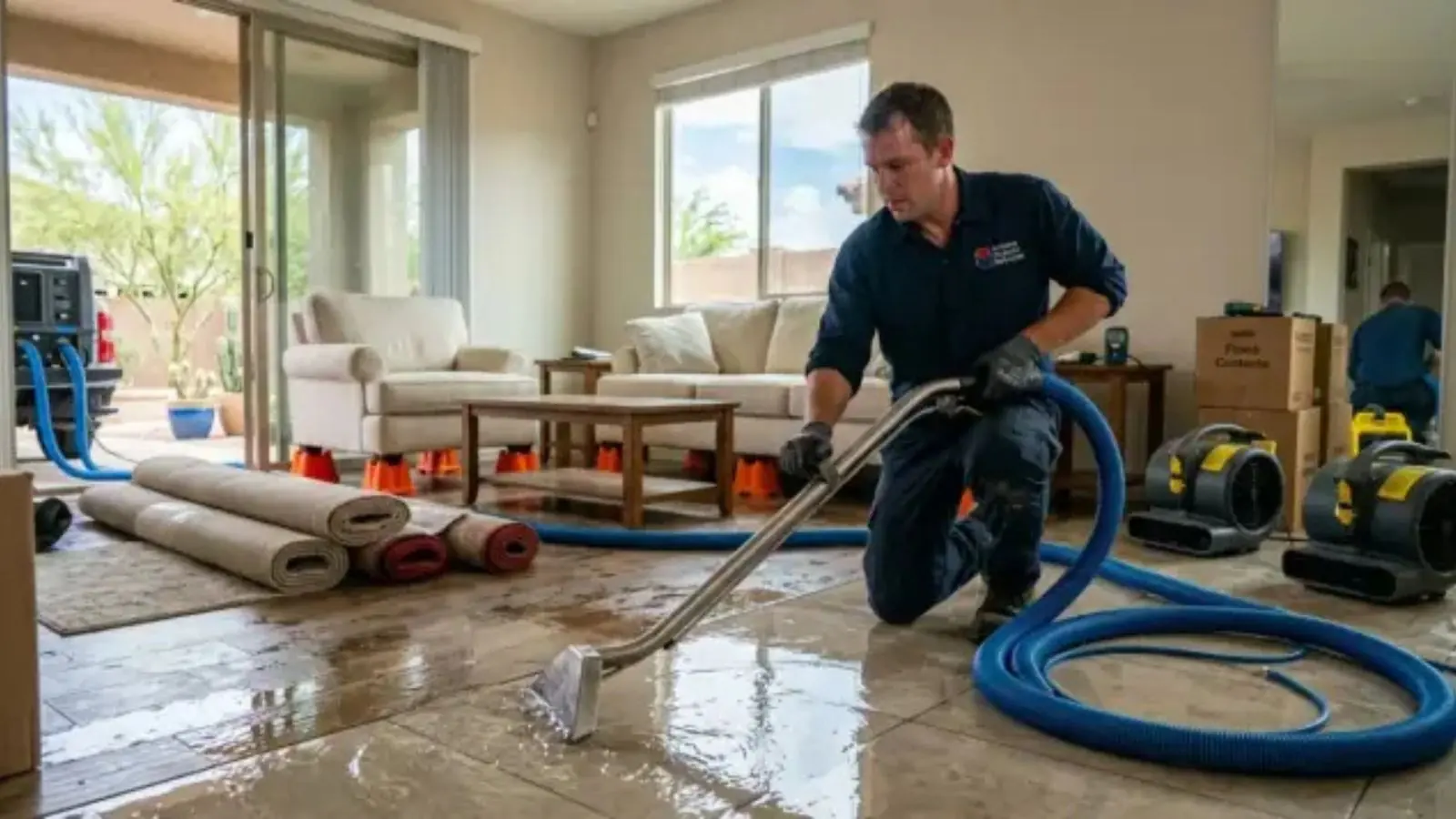
Water on the floor in Indio is an emergency, and the 24/7 line is open right now. While you wait for a crew, stop the source if you can: shut off the main water valve, turn off power to wet areas only if the panel is dry and safe to reach, lift valuables off the floor. Keep people and pets out of any water that might be contaminated.
Emergency water removal is the first hands-on step of a water loss. Submersible pumps and extraction units pull standing water out of the structure before it wicks into drywall, subfloors and carpet padding. It is a different job from drying, which comes next and is covered on the water mitigation page.
Callers often ask whether someone can come the same day, and the honest answer is that same-day response is offered when a crew is available. Tell the dispatcher where the water is coming from and how far it has spread, and they will explain the next step before anyone arrives.
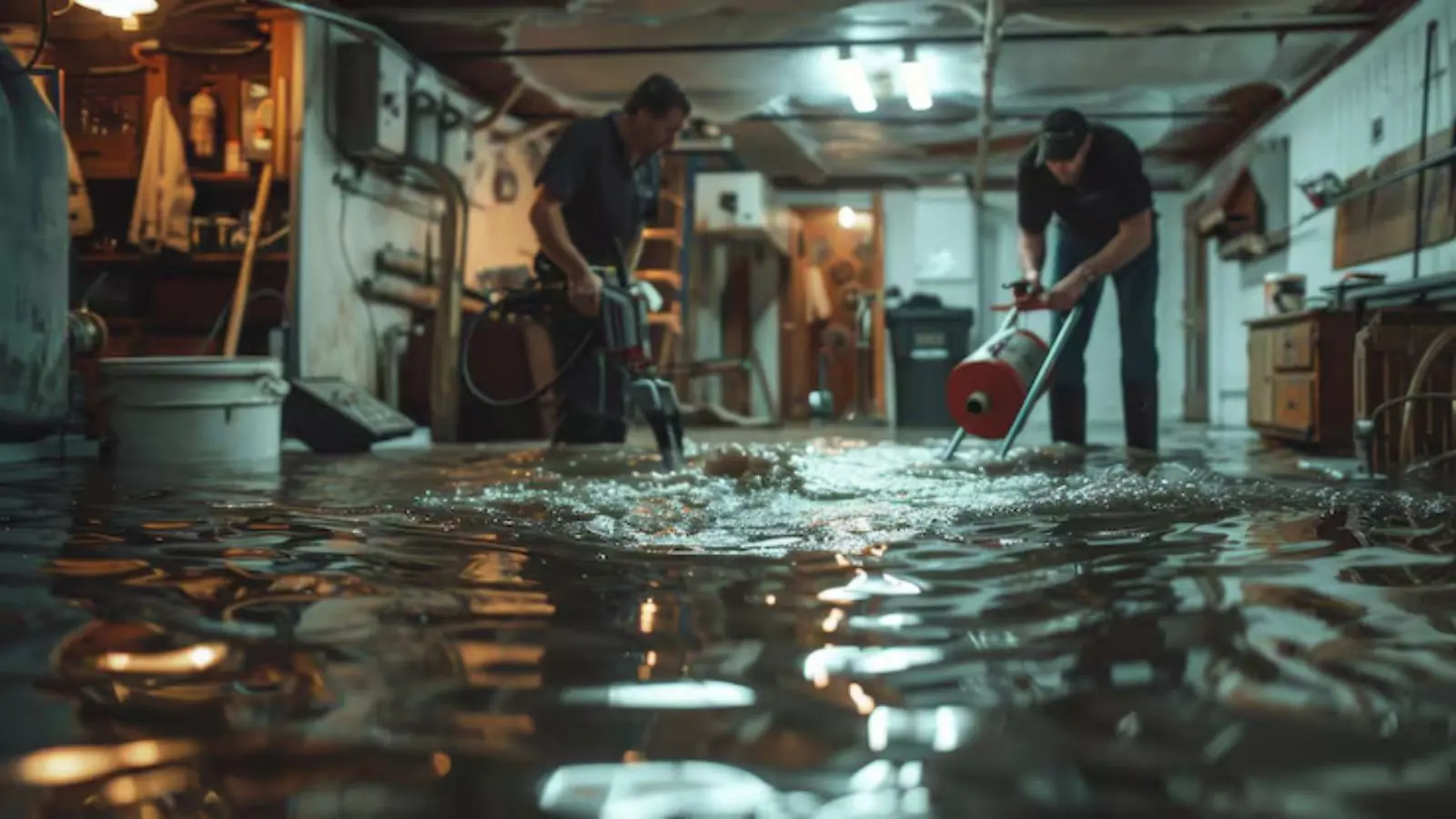
When standing water is an emergency
Some water losses can wait for morning and some cannot. A burst supply line, a water heater that has failed, a washing machine hose that let go or a roof leak after a storm can put several gallons a minute onto a floor. Within hours that water reaches baseboards, cabinet bases, drywall and the subfloor underneath.
Treat it as an emergency if water is still flowing, if it covers more than one room, if it has touched electrical outlets or appliances, or if it came from a toilet, drain or sewer line. Those last cases involve contamination, and they change how the cleanup has to be done.
A pipe that lets go at 2 a.m. gets the same attention as one that fails at noon. After-hours calls go to the same dispatch line, and same-day response is offered when a crew is available.
Electrical and sewage safety come first
If water has reached outlets, the panel or an appliance, stay out of the room. Cut power only if you can reach a dry panel without standing in water, and call 911 or the utility for any electrical or gas risk before you call the restoration line.
If the water came from a sewer line, a toilet or a floor drain, do not walk through it, do not touch it with bare hands and keep children and pets away.
What to do while you wait for the crew
The first thirty minutes matter. These steps limit the damage without putting you at risk.
- Find and stop the source. Close the shutoff valve at the fixture, or the main water valve at the house if you cannot find it.
- Check the panel before you touch it. Turn off power to wet areas only if you can do it from dry ground.
- Lift what you can: small furniture, rugs, electronics, books, papers and anything that bleeds color onto flooring.
- Take photos and short video of the water, the source and the damaged items before anything is moved.
- Open interior doors so a crew can see how far the water has traveled, and keep people and pets out of wet or contaminated areas.
- Call the 24/7 line and say where the water started, how long it ran and whether any of it came from a drain.
How standing water is removed
Removal starts with the right tool for the depth. Submersible pumps handle several inches of water in a basement, garage or open room. Truck-mounted or portable extraction units pull water from carpet, padding and hard flooring. Weighted extraction wands press water out of the carpet pile, and squeegees and wet vacuums finish low spots and corners.
Once the standing water is gone, technicians map what is still wet. Moisture meters read the drywall, baseboards and subfloor, and a thermal imaging camera checks for water behind walls and under cabinets. That map decides what can be dried in place and what has to come out.
Why speed changes what can be saved
Clean water that is removed quickly often lets carpet pad, drywall and hardwood dry in place. Water that sits turns into a bigger job, because materials swell, finishes lift and the water can pick up bacteria from the surfaces it crosses.
That is the reason the industry standard, ANSI/IICRC S500 for water damage restoration, ties the plan to the category of the water and how long it has been in the building. Homeowners can ask any company whether its crews work to that standard.
Water category and what happens next
The source of the water decides how it is handled. This decision framework follows the three categories used in the S500 standard.
| Category | Typical source | What it means for removal |
|---|---|---|
| Category 1 (clean) | Broken supply line, failed water heater, overflowing sink | Fast extraction, then drying in place. Most materials can often be saved if removal is quick. |
| Category 2 (gray) | Washing machine or dishwasher discharge, toilet overflow with urine only | Extraction plus cleaning and disinfecting. Carpet padding is usually removed and discarded. |
| Category 3 (black) | Sewage, rising storm water, long-standing Category 2 water | Extraction by trained crews with protective gear. Porous materials such as carpet and drywall are typically removed. |
Water can move up a category the longer it sits. A Category 1 leak that stays wet for days may be treated as Category 2.
Burst pipe water damage
A burst pipe is the classic emergency water removal call. A supply line under a sink, a fitting behind a toilet or a pipe inside a wall can run for hours before anyone notices, especially when a house is empty.
The first move is the main water valve. After that, a crew pumps or extracts whatever pooled on the floor, then opens the wall or ceiling where the water traveled. Water follows framing and plumbing chases, so the room with the stain is often not the room with the break.
Technicians use moisture meters and a thermal imaging camera to find the wet path, cut out only the drywall that has to go, and set air movers and LGR dehumidifiers to dry the cavity. The plumbing repair itself belongs to a licensed plumber, and the rebuild belongs to the water damage repair stage once everything reads dry.
What affects the cost of water removal
No honest price can be quoted before someone sees the loss. Scope and price are explained before work starts, and these are the factors that move the number.
Water category
Clean water is the simplest case. Gray and black water add protective gear, disinfecting and more material removal.
Affected area
A single room costs less than water that traveled through a hallway, a closet and into the next room.
Materials involved
Tile and sealed concrete tolerate water. Carpet padding, drywall and laminate flooring often do not.
Drying days and equipment
The number of air movers and dehumidifiers, and how many days they run, depends on how wet the structure is.
Rebuild scope
Removal is only the first stage. Replacing drywall, flooring and paint is priced separately once drying is done.
Where Indio water losses come from
Indio is served by the Indio Water Authority, which pumps from the Coachella Valley Groundwater Basin, and by the Valley Sanitary District for sewer. If water is coming from the city side of your meter, the utility handles it. If it is already inside your walls, the restoration line does.
Storm water is a separate source. Tropical Storm Hilary in August 2023 eroded the Coachella Valley Stormwater Channel enough to damage the City of Indio's Westward Ho water main, according to a FEMA public notice. Local TV reported flash flooding in the nearby Indio Hills area on September 28, 2026, with a flash flood warning that also covered Indio. For storm water inside the home, the flood damage restoration page explains the added steps for Category 3 water.
To see whether your address sits in a mapped flood zone, use the FEMA Flood Map Service Center. The City of Indio storm page points homeowners there, and it is worth checking before the next storm rather than during it.
Insurance and documentation
Insurance treats sources differently. Sudden and accidental water damage is often covered, gradual leaks and neglect often are not, and flood damage is usually excluded and needs separate flood coverage. Read your policy or ask your insurer before assuming anything.
California regulations generally give an insurer 15 calendar days to acknowledge a claim and up to 40 calendar days to accept or deny it after proof of claim. Confirm the details with the California Department of Insurance if your claim stalls. Moisture readings, photos and a written scope from the crew give you paperwork to attach to the claim.
Water is spreading while you read this. The 24/7 line is open.
☎ (760) 769-1159After the water is out
Extraction is not the finish line. Hidden moisture in wall cavities and subfloors needs structured drying, which is the job of water mitigation. Ruined materials and surfaces that touched dirty water then go through water damage cleanup.
Crews dispatching from Indio also cover nearby towns, including La Quinta, so the same line reaches the rest of the valley.
Frequently asked questions
Yes. The dispatch line is open 24 hours a day, every day of the year, including nights, weekends and holidays. Water damage spreads faster than most people expect, so after-hours calls are treated the same as daytime calls.
Same-day response is offered when a crew is available. No arrival time is promised over the phone, but you will be told what to do while you wait.
Only if the breaker panel is dry and you can reach it without stepping in water. If water is near outlets, appliances or the panel itself, stay out and call 911 or the utility before calling the restoration line.
The City of Indio storm guidance gives the same basic advice: shut off electricity at the breaker panel if water rises near outlets.
A household wet vacuum can help with a small puddle on tile or sealed concrete. It cannot reach water that has soaked into padding, baseboards or wall cavities.
Never use a standard shop vacuum near wet outlets or extension cords, and do not use one on sewage or any water you suspect is contaminated.
Technicians use pin and pinless moisture meters to take readings along walls and floors, then check suspect areas with a thermal imaging camera. Wet materials hold heat differently, so a thermal image shows patterns that the eye cannot see.
Those readings are recorded, which also gives you a log to hand your insurer. The water damage cleanup page explains what happens to materials that cannot be saved.
Sudden and accidental water damage, such as a burst supply line, is often covered, while gradual leaks and neglect often are not. Flood damage is usually excluded and needs separate flood coverage. Check your policy or ask your insurer, because wording varies.
The California Department of Insurance advises homeowners to make temporary repairs that prevent further damage and to keep a log of calls and paperwork.
Water that comes from the utility side of your meter is the responsibility of the Indio Water Authority, whose after-hours emergency calls are routed through Police Dispatch. Sewer problems in Indio go to the Valley Sanitary District.
Once the source is handled, the restoration line can remove the water that already came indoors.