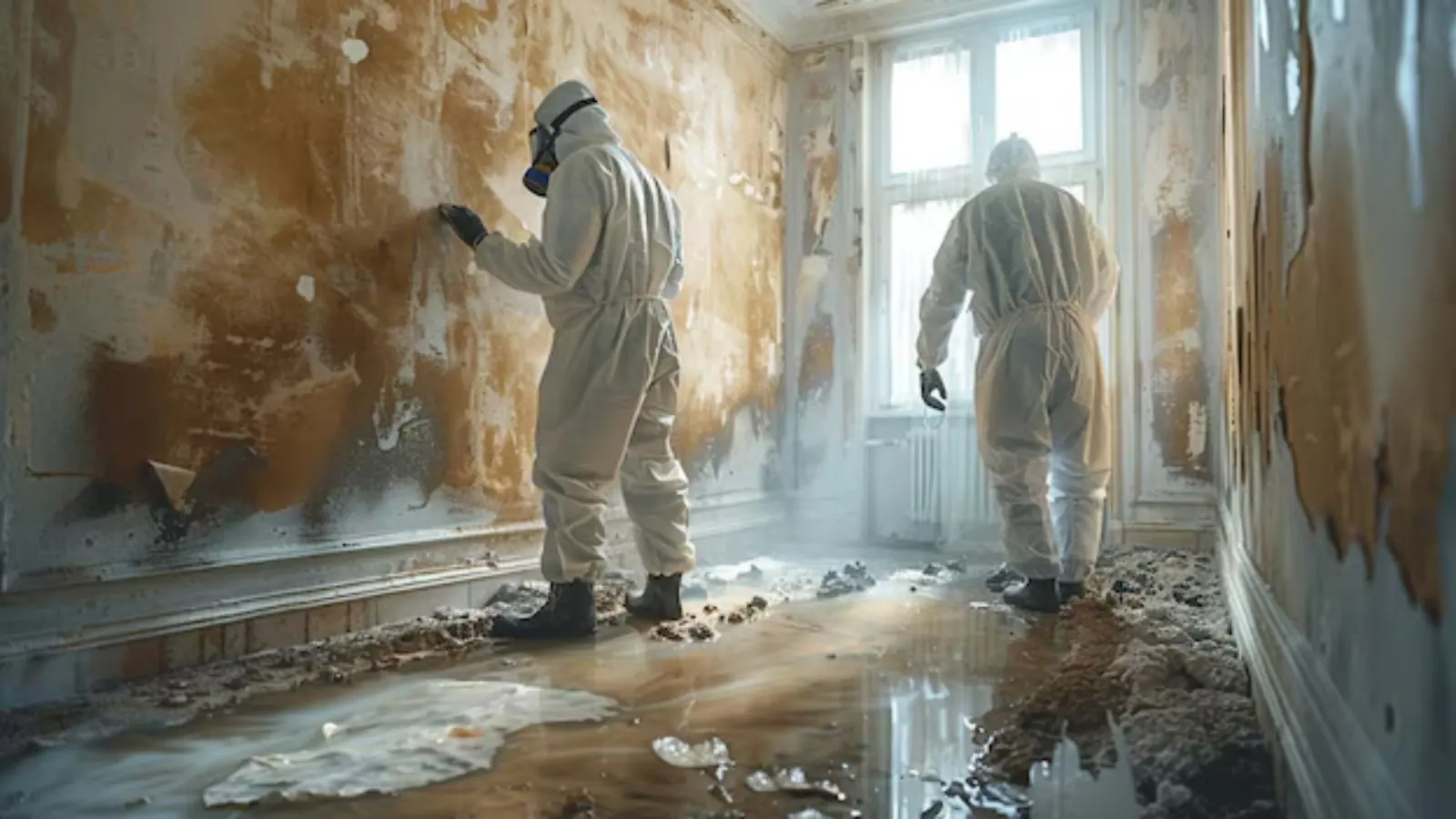
Mold remediation in Indio, California means finding the moisture that fed the growth, containing the affected area, removing contaminated materials and verifying the result. It is a planned job rather than a 3 a.m. emergency, but the 24/7 line is open if you are dealing with a leak that is still active.
Remediation follows ANSI/IICRC S520, the published standard for professional mold remediation. Homeowners can ask any company whether its crews work to it. The standard calls for fixing the moisture first, because mold regrows wherever damp material stays damp.
Callers usually want to know three things: how big the problem is, what it will take to fix it and what it will cost. Scope and price are explained before work starts, and an inspection tells you which of the three applies.
Musty smell, dark spots on the ceiling or a stain that keeps coming back?
Many people find mold before they know the trade name. A musty smell in a closet, dark speckles on a bathroom ceiling, bubbling paint or a stain that returns after you clean it are all signs that something stayed wet. The professional answer to those symptoms is called mold remediation.
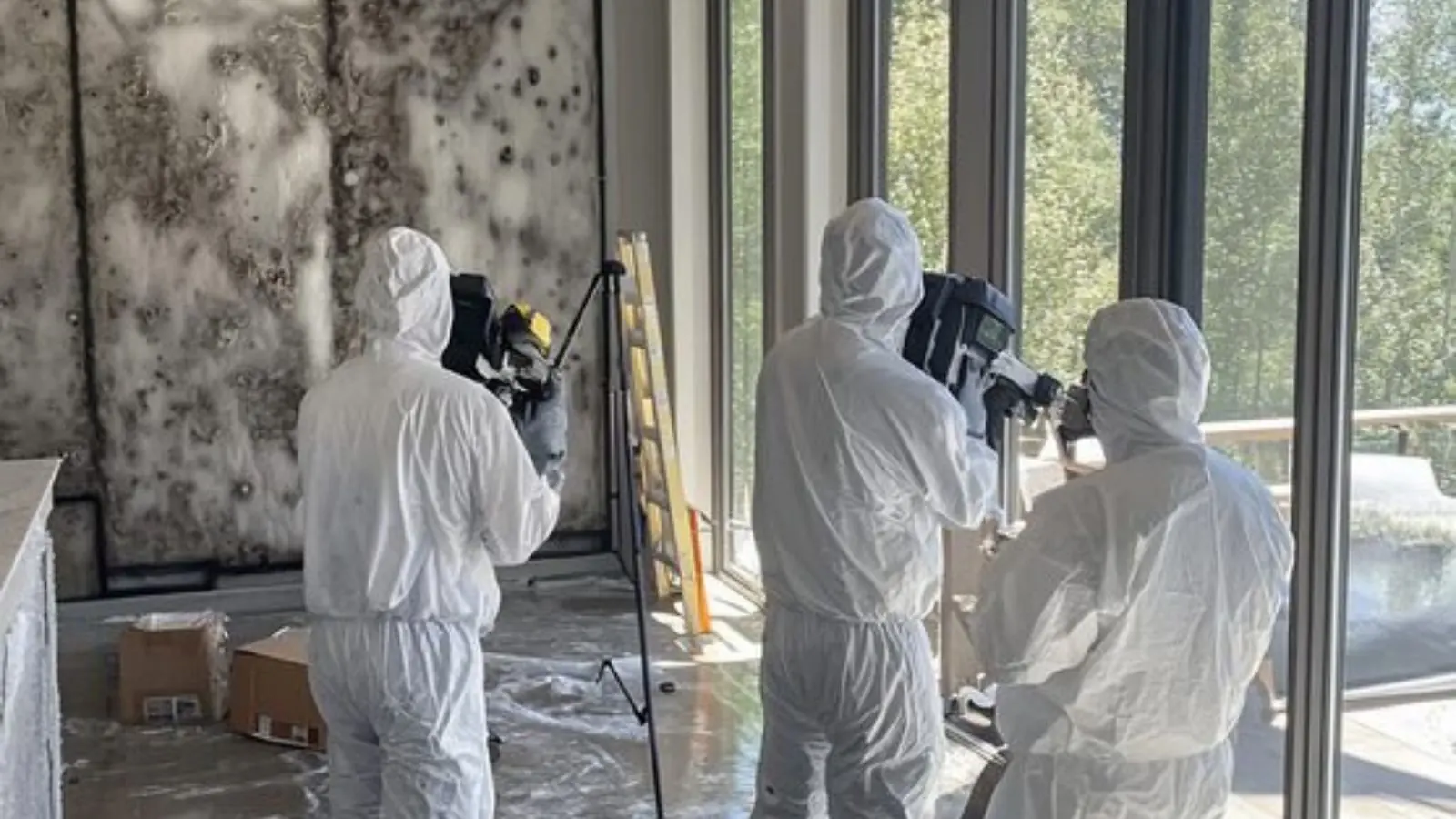
It starts by finding the moisture. Technicians take moisture readings with meters and a thermal imaging camera, then decide whether the growth is a small surface problem or has spread into the materials behind it.
How crews size a mold job
This decision framework shows the usual difference between a small area, a larger area and growth that is hidden behind finishes. The inspection decides which one you have.
| Situation | What it looks like | Typical approach |
|---|---|---|
| Small surface area | A few patches on tile, a painted surface or a bathroom ceiling, with the leak fixed | Source stopped, affected materials cleaned or removed, area dried and checked |
| Larger area | Growth across a wall, ceiling section or multiple rooms | Containment with plastic barriers, negative air, HEPA air scrubbers and removal of affected drywall or insulation |
| Hidden moisture | Musty smell, stains or soft materials with no obvious growth | Moisture mapping, targeted openings, source repair and drying before any removal plan |
These are general descriptions, not a diagnosis. Only an on-site inspection can say which applies to your property.
Mold removal and black mold cleanup
Remediation crews work in a sealed area. They hang plastic barriers, run a HEPA air scrubber and set the space under negative air pressure so air flows into the work zone rather than out of it. That keeps disturbed particles from spreading into the rest of the house.
Porous materials with growth, such as drywall, ceiling texture, insulation and carpet pad, are cut out, bagged and removed. Hard surfaces and framing are cleaned with HEPA vacuums and damp wiping, and the area is dried before anything is rebuilt.
Dark mold is often called black mold, but color does not identify a species and cannot be judged by eye. Only lab testing can do that, and the remediation steps are the same either way: stop the moisture, contain, remove, clean and verify. Questions about mold and health belong to a physician.
Mold after water damage
When a leak or flood goes unattended, mold can follow. The faster wet materials are dried, the less chance it has to start, which is why water mitigation matters so much after a loss. If drying was delayed or hidden moisture was missed, the remediation job starts where the drying job left off.
Typical sources include a leaking toilet or sink supply line, an air conditioner condensate line that backs up, a roof leak above a ceiling or a window that lets in rain. In each case the work is the same: repair the source, dry the structure and remove what cannot be saved.
Once the area is clean and dry, the water damage repair stage rebuilds drywall, insulation and finishes.
Mold testing and clearance
Testing and remediation are separate jobs. An independent tester can sample air and surfaces before work to document conditions, and again after remediation to confirm the area has returned to normal. A tester who does not perform the removal has no stake in the result, which is the point of independent clearance.
Clearance documentation is useful when a home is being sold or refinanced. A buyer's lender may ask for proof that mold has been addressed. The paperwork gives them something to review, but whether they accept it is their decision and no promise can be made.
Testing is not required for every job. When growth is visible, the standard approach is to fix the moisture and remove the contaminated materials, with testing added where documentation or verification matters.
What affects the cost of mold remediation
Price is not set until someone sees the problem. These are the factors that move it.
Size of the affected area
A patch on one ceiling is a different job from growth across several rooms.
Materials involved
Drywall and insulation are removed and replaced. Hard surfaces and framing can often be cleaned.
Containment and air handling
Larger jobs need plastic barriers, negative air and HEPA air scrubbers set up and run for days.
Drying days and equipment
Damp structure has to be dried before and after removal, with air movers and dehumidifiers.
Testing and rebuild scope
Clearance testing, drywall replacement and paint are separate stages that add to the total.
Not sure how big it is? An inspection answers that. The 24/7 line is open.
☎ (760) 769-1159Insurance, licensing and what to ask a company
The California Department of Insurance says mold damage caused by a covered peril may be covered under a homeowners policy. Mold that comes from ignored leaks or long-term neglect often is not. Read your policy or ask your insurer, and never assume a claim will be approved.
California does not license mold assessors or remediators as a separate trade, according to the California Department of Public Health. Ask any company about its training, whether it works to the S520 standard and how it builds containment. The Contractors State License Board requires a license for work valued at $1,000 or more in labor and materials, so ask whether the company holds one.
Mold and moisture in Indio homes
Indio homeowners get water from the Indio Water Authority and sewer service from the Valley Sanitary District. A leak anywhere in the home's plumbing, whether on the supply side or in a drain, can put moisture inside a wall long before a stain appears.
Storm events also matter. Tropical Storm Hilary in August 2023 caused flooding across the Coachella Valley and damaged an Indio water main, according to a FEMA public notice. Homes with water intrusion after a storm should be dried promptly to head off mold, and the flood damage restoration page explains how storm water is handled.
If repairs involve opening walls or changing plumbing, ask the City of Indio Building and Safety Division whether a permit is needed. The city says a permit is required before work begins, with some exemptions. Crews in nearby towns such as Palm Desert follow the same process.
Frequently asked questions
It can be removed, but it will not stay gone if the moisture source remains. A leaking supply line, a clogged air conditioner condensate line, a roof leak or a leaking toilet seal keeps materials damp, and mold grows where damp materials stay.
A remediation plan starts by locating and stopping the water, then drying the structure with air movers and dehumidifiers.
California does not. The California Department of Public Health states that the state has no licensing or regulations for mold assessors or remediators. That puts the burden on you to ask questions.
Ask about training, the S520 standard the crew follows, how containment is built and whether the company holds a California contractor license. The state contractor board requires a license for work valued at $1,000 or more in labor and materials.
It depends on why the mold formed. The California Department of Insurance says mold damage caused by a covered peril may be covered under a homeowners policy, while mold from long-term neglect or an ignored leak often is not.
Read your policy or ask your insurer, and keep photos, moisture readings and repair invoices. Do not assume a claim will be approved.
Clearance testing is an inspection after remediation to confirm that the work area is back to normal conditions. An independent tester, who has no stake in the remediation, usually takes air or surface samples and compares them with a reference.
Independent testing is the cleanest way to verify the work, because the person grading it is not the person who did it.
Remediation and clearance testing give you written documentation to share with a buyer, agent or lender. What the lender accepts is their decision, and no outcome can be promised.
Call early in the sale process. Remediation, drying and testing take several days, and a short closing window leaves little room.
When a crew is free, a same-day visit is possible, and the dispatch line is open around the clock. If the leak is still active, say so on the call so the water can be dealt with first.
For stable, dry mold, an inspection can be scheduled at a convenient time. No arrival time is promised.
A small stain on a hard, non-porous surface like tile can often be cleaned by a homeowner after the moisture is fixed. Porous materials such as drywall, ceiling texture and insulation usually cannot be cleaned and need removal.
Questions about how mold affects anyone's health belong to a physician, not a restoration company. See the table below for how crews judge the size of a job.