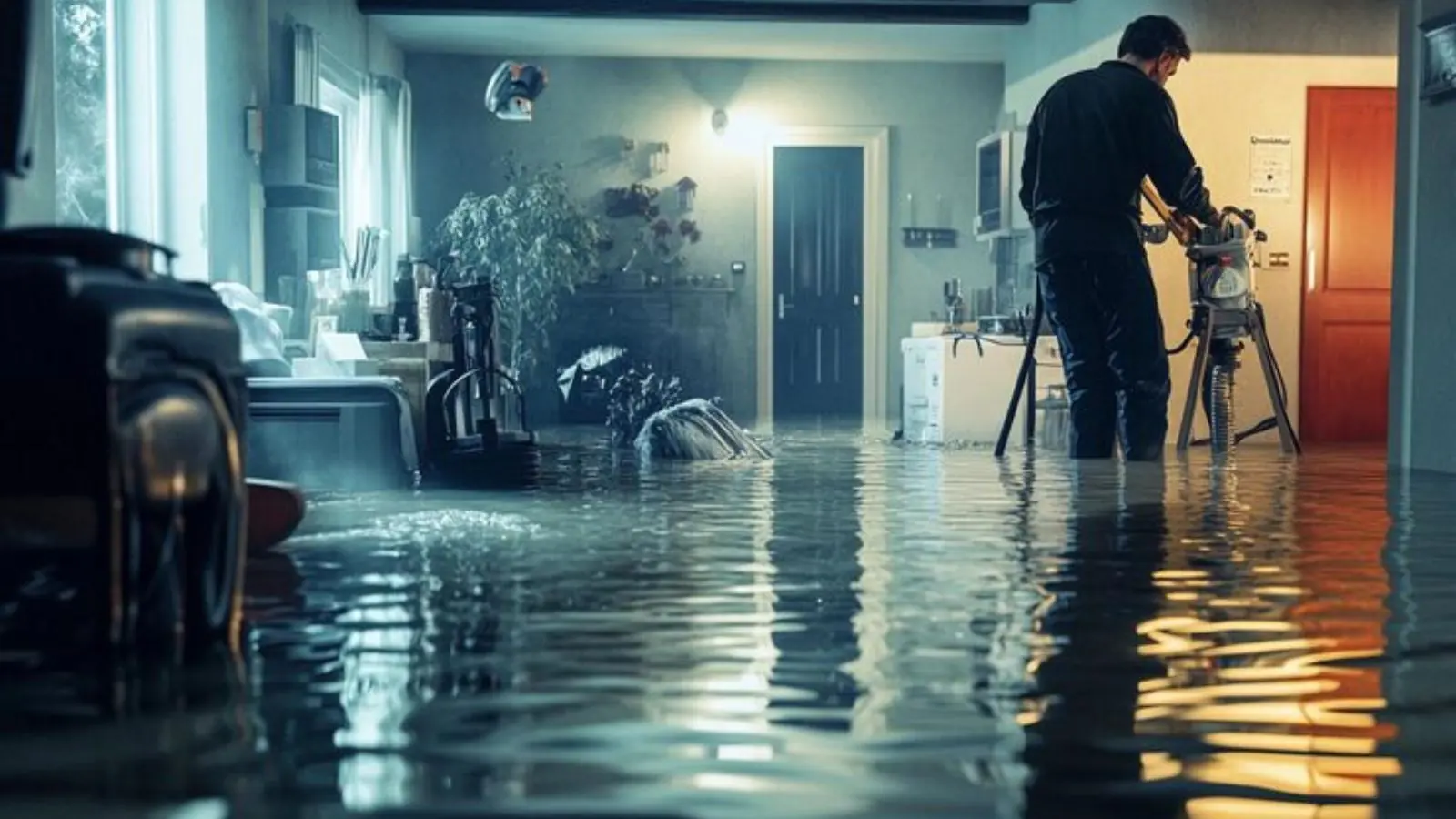
Water is spreading and every hour matters, so start with the basics. Shut off the main water valve, turn off power to wet areas only if the panel is dry and safe to reach, lift valuables off wet floors, and keep people and pets out of dirty water. Then call the 24/7 line and say what is wet.
Water mitigation is the emergency work that limits damage in the first 24 to 72 hours: stopping the source, extracting standing water and starting controlled drying before materials swell, stain or grow mold in your Indio, CA home or business.
Mitigation is not the rebuild. It protects what can still be saved, and it hands a dry, documented structure to water damage repair when the drying is done.
Carpet is soaking, a wall feels damp and there is a smell: what do you need?
That combination of wet carpet, damp drywall and an odor is the usual sign that water has moved past the surface. The trade name for what fixes it is water mitigation: pulling out the water, drying the structure behind the finish and measuring until the readings say it is dry.
Household fans and a shop vacuum can help with a small clean spill. When water has reached the wall or the floor under the carpet, it takes extraction units, air movers and dehumidifiers placed by a crew to dry it fully.
When water damage is an emergency
Treat it as an emergency if water is still flowing, a ceiling is sagging or bulging, water is near outlets, panels or appliances, the water is dirty, or more than a few square feet of floor are wet. Also treat it that way if you cannot tell where the water is coming from. Waiting for business hours is the most common mistake, because pipes do not fail on a schedule.
Nights, weekends and holidays are covered by after-hours dispatch. Same-day response is offered when crews are available, and the dispatcher will tell you honestly what to expect rather than quote an arrival time.
Water near electricity
Stay out of standing water if it touches outlets, power strips, appliances or the electrical panel. Cut power at the panel only if you can reach it while standing on dry ground. If you see sparks, smell burning or smell gas, leave the building and call 911 or the utility before you call the restoration line.
What happens on a mitigation call
Standing water goes first, and emergency water removal covers the pumping in detail. Debris removal and sanitizing follow through water damage cleanup. Here is the usual order on a call:
- You call the 24/7 line and describe the source, which rooms are wet and when the water started.
- The crew confirms the source is stopped and checks for electrical or contamination hazards.
- Standing water is pumped or pulled out with extraction units.
- Moisture meters and a thermal imaging camera map where the water traveled, including behind walls and under floors.
- Materials that cannot be dried in place, such as saturated carpet pad, are removed so they stop holding water against the structure.
- Air movers and LGR dehumidifiers are set up and the area is closed off so the equipment works on the wet rooms only.
- Readings are taken and logged on each visit until every material reaches the dry standard.
- The equipment is removed and the file moves to repair, with photos and readings you can give your insurer.
Structural drying
After the standing water is gone, the water that matters most is the water inside materials. Drywall, framing, subfloor and even a concrete slab hold moisture that fans alone will not release. Structural drying moves that moisture out on purpose.
Air movers push dry air across surfaces and into wall cavities through small openings. LGR dehumidifiers pull the released moisture out of the air so it does not settle somewhere else. Rooms are closed off, and the crew checks moisture meters each visit while a thermal imaging camera shows cool, wet areas the eye misses.
Drying is measured in days, and the readings decide when it ends rather than a calendar. Thick materials such as hardwood, plaster and concrete dry slowly. The equipment is placed, monitored and picked up by the crew, so this is not a job where units are left with you to run. ANSI/IICRC S500 is the published standard that describes this work, and you can ask any company whether its crews follow it.
Water categories: what each means and what mitigation does
| Category | Typical source | What mitigation usually does |
|---|---|---|
| Category 1 | A clean source such as a broken supply line, an overflowing sink or a water heater supply failure | Extraction and drying in place, with most materials kept |
| Category 2 | Some contamination, such as washing machine or dishwasher discharge | Extraction, removal of porous materials such as carpet pad, cleaning and drying |
| Category 3 | Seriously contaminated water such as sewage, river or floodwater, or water that sat long enough to degrade | Containment, removal of porous materials, cleaning and sanitizing, then drying |
ANSI/IICRC S500 defines these categories. Clean water that sits can move to a higher category, which is another reason not to wait.
The equipment, in plain words
LGR stands for low grain refrigerant, a dehumidifier design that keeps pulling moisture even when the air is already fairly dry.
| Tool | What it does | Why it matters |
|---|---|---|
| Extraction unit | Pulls standing water out of carpet, pad and hard floors | Removes the bulk of the water before drying starts |
| Moisture meter | Reads moisture inside drywall, wood and subfloor | Shows what is wet when the surface looks dry |
| Thermal imaging camera | Shows temperature differences that suggest hidden moisture | Finds wet areas before walls are opened |
| Air mover | Moves dry air across wet surfaces | Speeds the release of moisture from materials |
| LGR dehumidifier | Removes moisture from the air | Keeps moisture from resettling in other materials |
| HEPA air scrubber | Filters air when dust or mold risk is present | Used when demolition or contamination is part of the job |
What affects the cost of water mitigation
No one can quote fairly over the phone without the facts below. Want your real number? Call the 24/7 line and describe what happened.
Water category
Clean, gray and contaminated water call for different removal and cleaning steps, and the category can worsen the longer water sits.
Affected area
The number of rooms, the square footage and whether water reached the ceiling below all change how much equipment and labor the job needs.
Materials involved
Carpet and pad, hardwood, laminate, tile over slab and plaster behave differently when wet and dry at different speeds.
Drying days and equipment
More wet material means more air movers and dehumidifiers running for more days, which is the part of the job most tied to the readings.
Rebuild scope
Mitigation ends when the structure is dry. Replacing drywall, floors and finishes is a separate scope that is explained before it begins.
A wet floor does not wait for business hours. The line is open now.
☎ (760) 769-1159Insurance and mitigation records
Mitigation is the kind of prompt action insurers expect. The California Department of Insurance advises making temporary repairs to prevent further damage and keeping a log of calls and correspondence. Sudden and accidental losses are often covered, gradual leaks and neglect often are not, and flood damage is usually excluded and needs separate flood coverage, so check your policy or ask your insurer.
Moisture logs, photos and equipment records give your adjuster a clear timeline. California regulations generally give insurers 15 calendar days to acknowledge a claim and up to 40 calendar days to accept or deny after proof of claim, and the department can confirm the current rules. Nothing here promises that a claim will be approved.
Water emergencies in Indio: who to call first
Indio Water Authority supplies drinking water in Indio, and its contact page lists an after-hours emergency contact through Police Department dispatch. If water is running from the street side of your property, ask the authority which side of the meter the leak is on before assuming it is yours to fix. Your own main shutoff valve is the one to close when the leak is inside the house.
Sewage is a different system. Valley Sanitary District serves Indio and surrounding areas, and its website has a Report a Problem page. A sewage backup inside the house is Category 3 water, so stay out and see flood damage restoration for how that cleanup works.
Weather matters too. A FEMA notice says Tropical Storm Hilary in August 2023 damaged an Indio water main when floodwater eroded the Coachella Valley Stormwater Channel.
More recently, local TV reported flash flooding in the Indio Hills area on September 28, 2026, and a flash flood warning covered Indio that night. A warning does not mean your house floods, but it is the moment to lift valuables off floors, clear low points at doors and find your main shutoff and breaker panel.
Crews dispatch from Indio to nearby towns, including La Quinta and Coachella.
Frequently asked questions
Yes. Dispatch answers at all hours, on weekends and on holidays, and crews go out the same day when they are available. No arrival time is promised on the phone, so the dispatcher will tell you honestly what to expect.
While you wait, shut off the main water valve, lift valuables, keep power off to wet areas if it is safe to do so and keep people and pets out of dirty water.
It is measured in days and the readings decide the end date. Small clean-water losses may dry faster, while hardwood, plaster, concrete slabs and wall cavities that stayed wet take longer. A crew that promises a drying time before taking readings is guessing.
For a small clean spill on a hard floor, household fans can help. They do not reach wet insulation, wall cavities or subfloors, and they cannot tell you when the structure is actually dry. Drying that stops too soon leaves moisture behind, and that is how stains and mold start.
Mitigation stops the damage by extracting water and drying the structure. Water damage cleanup removes ruined debris and contaminated materials and sanitizes the space. Many jobs need both, and the crew explains the order on site.
Only if you can reach the panel while standing on dry ground. If water is near the panel or you are unsure, stay out and call 911 or the electric utility for any sparking, burning smell or gas smell before you call the restoration line.
Often when the loss is sudden and accidental, and often not when it came from a gradual leak or neglect. Flood damage is usually excluded and needs a separate flood policy. Check your policy or ask your insurer, and keep the moisture logs and photos the crew provides.
Yes. Dispatch covers Coachella, La Quinta, Palm Desert, Indian Wells and Thermal. The page for Thermal covers the local detail for that community.