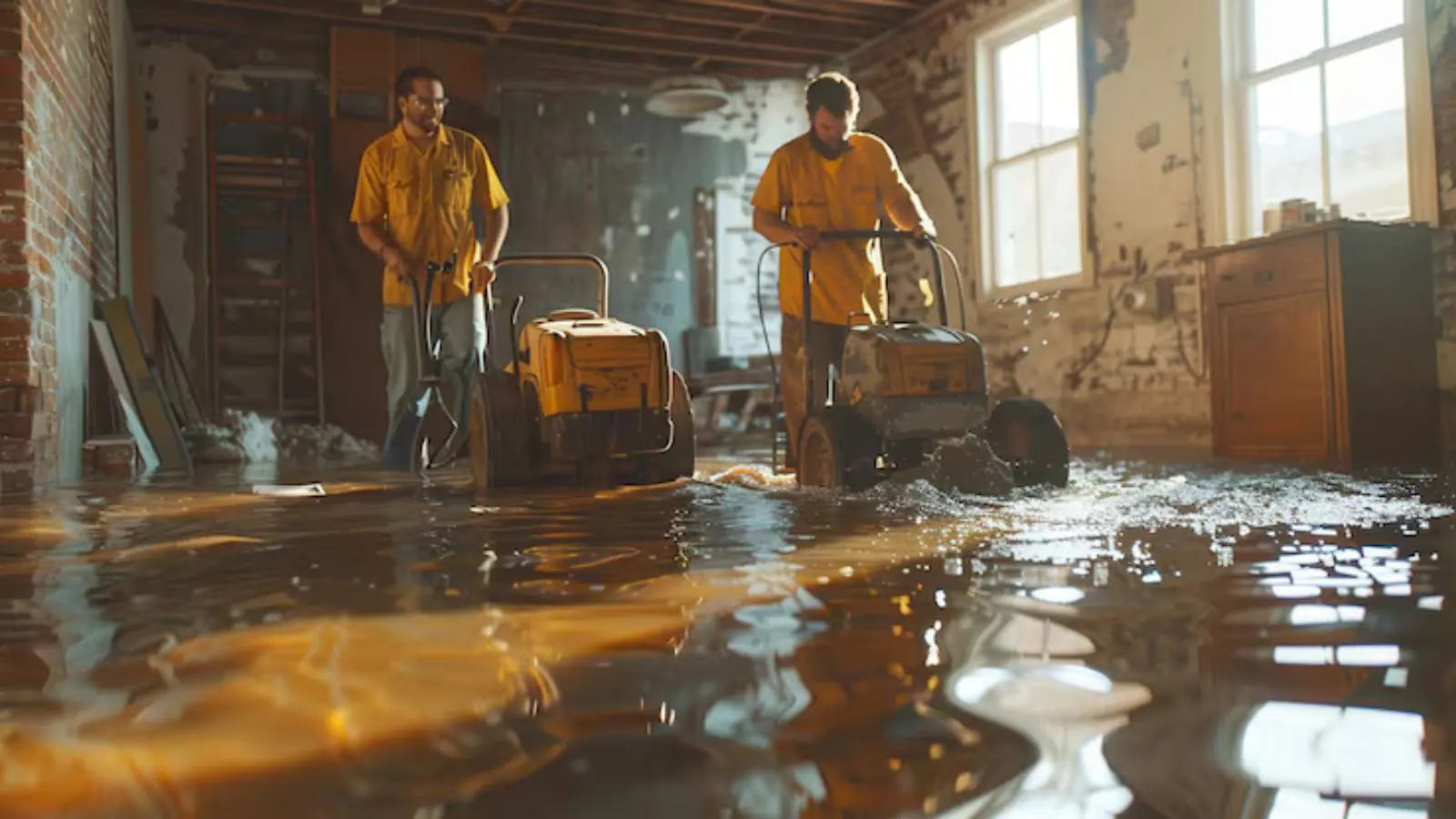
The first two days after a leak or overflow usually decide how much can be saved, so move now. Stop the source, shut off the main water valve, keep power off to wet areas unless the panel is dry and safe to reach, lift valuables and keep children and pets out of dirty water. The 24/7 line is open for cleanup calls tonight or on a holiday weekend.
Water damage cleanup is the work of removing what the water ruined and making the space clean enough to dry and rebuild: wet debris, soaked carpet pad, swollen drywall, soiled belongings and the odor that follows. It starts once the source is stopped. Emergency water removal does the pumping, water mitigation does the drying and water damage repair does the rebuild.
When water damage cleanup cannot wait
Call right away if the water came from a toilet, a sewer line, a washing machine drain or outdoors, because contaminated water changes what is safe to touch. Call right away too if carpet and pad have been wet for more than a day, if water is sitting behind cabinets or baseboards or if the building sat empty while a leak ran. A musty smell is an early warning that something is staying wet.
Nights, weekends and holidays are handled by after-hours dispatch, and same-day response is offered when crews are available. No arrival time is promised on the phone.
Do not wade into dirty water
Keep out of water that came from a sewer, a toilet or a flooded yard. Do not run a household vacuum on wet floors, do not switch on fixtures under a wet ceiling and stay out of rooms where the ceiling sags. Call before you move anything heavy or soaked.
Cleanup in the first 48 hours
| Window | What matters | What to avoid |
|---|---|---|
| First few hours | Stop the source, photograph the damage, lift valuables and get standing water out | Walking through dirty water, using a household vacuum, switching on fixtures under a wet ceiling |
| Rest of the first day | Remove soaked carpet pad and other materials that cannot be saved, start drying, move contents to dry rooms | Letting wet carpet press against walls, stacking wet items on dry furniture |
| Second day | Clean and sanitize the surfaces that stay, check wall cavities and baseboards, find odor sources | Painting, closing walls or laying new flooring over damp materials |
| After two days | Moisture readings decide what stays, and anything that has begun to smell or darken is reassessed | Assuming dry-looking surfaces are dry |
These windows describe how water behaves in materials. They are not an arrival promise or a completion time.
What gets removed and what gets saved
Cleanup is a series of save-or-remove decisions made with a moisture meter and the water category in hand. The aim is to save what can be dried and cleaned and to remove what cannot.
Carpet and pad
Pad acts like a sponge and is usually discarded. Carpet may be lifted, cleaned and dried after clean water if it is handled quickly. Carpet that touched sewage or floodwater is generally removed.
Drywall and insulation
Wet insulation is removed. Drywall that is soft, stained through or contaminated is cut out, usually along a straight line above the wet area, so the framing can dry and the repair stays clean.
Flooring and cabinets
Hard floors are cleaned and dried in place when possible. Particleboard cabinets and laminate swell and often cannot be saved, while solid wood and plywood sometimes can.
Belongings
Furniture, books, electronics and clothing are sorted into dry, cleanable and discard piles. Photograph items before they go so the list can support an insurance claim.
Sanitizing and deodorizing
Cleaning removes soil. Sanitizing applies an antimicrobial treatment to surfaces that stay, after the debris is gone and the surface has been cleaned. Skipping the cleaning step wastes the treatment, which is why the order matters.
Odor usually comes from materials that stayed wet, not from the air. Most smells leave when those materials leave and the structure dries. HEPA air scrubbers filter dust and particles during demolition, and deodorizing is the finishing step rather than a substitute for removing the source. If growth is visible, mold remediation follows its own containment steps.
Category 2 and 3 water: contaminated cleanup
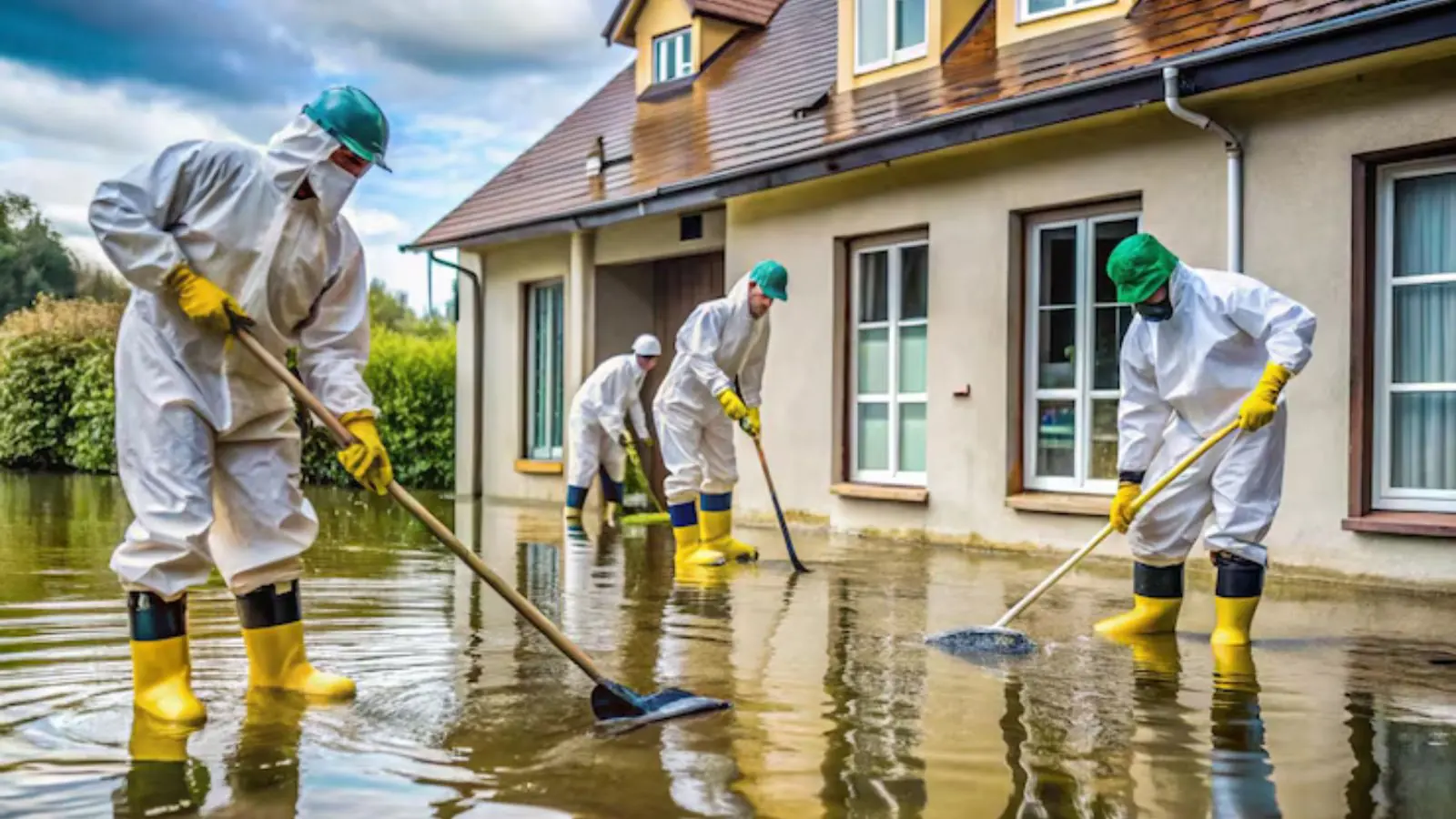
Category 2 water carries some contamination, such as discharge from a washing machine or dishwasher. Category 3 water is seriously contaminated, such as sewage or floodwater, or water that sat long enough to degrade. ANSI/IICRC S500 describes these categories, and porous materials that touched Category 3 water are generally removed rather than cleaned.
Sewage backups bring their own safety steps, and the full process is on the flood damage restoration page. In Indio, sewer service comes from Valley Sanitary District, which has a Report a Problem page on its website. Stay out until the source is identified, and do not keep running water into a backed-up line.
What affects the cost of water damage cleanup
Cleanup is priced by what has to come out and how contaminated it is. Scope and price are explained before work starts, and a real number needs a conversation. Call the 24/7 line to describe the loss.
Water category and contamination
Clean water allows more materials to be saved. Category 2 and 3 water means more removal, more cleaning and more careful disposal.
Amount of material to remove
A single soaked rug and a whole floor of carpet, pad and baseboard are very different loads of debris and labor.
Access and layout
Upper floors, tight rooms and finished walls take more labor to clear than an open garage or an unfinished space.
Contents handling
Packing, moving, cleaning and inventorying belongings adds time, especially for electronics, books and upholstered furniture.
Drying and rebuild that follow
Drying days and the rebuild are separate scopes. Each is explained before it begins so there is no surprise at the end.
Debris and damp materials do not improve with time. Call the 24/7 line and describe what is wet.
☎ (760) 769-1159What to document before anything is thrown away
- Photos of every affected room from more than one angle, taken before removal starts.
- Photos of damaged belongings before disposal, with model and serial numbers for electronics.
- A written list of what was discarded, with approximate age and value.
- A log of every call and email with your insurer, including names and dates.
- Receipts for temporary repairs, equipment, hotel stays and replacement basics.
- The crew's written scope of work and any moisture readings they provide.
Insurance and cleanup
Coverage depends on the cause. Sudden and accidental water damage is often covered, gradual leaks and neglect often are not, and flood damage is usually excluded. The California Department of Insurance says homeowners policies do not cover flood damage, and that flood insurance is a separate policy that usually takes effect 30 days after purchase. Check your policy or ask your insurer, because nothing here promises that a claim will be approved.
The department also says mold damage caused by a covered peril may be covered under a homeowners policy, which is another reason to document and dry quickly. California regulations generally give insurers 15 calendar days to acknowledge a claim and up to 40 calendar days to accept or deny after proof of claim.
Cleanup after storms and main breaks in Indio
Tropical Storm Hilary, August 19 to 21, 2023, led Riverside County to proclaim a local emergency that cited flooding in neighborhoods, business districts and roadways. A FEMA notice adds that the storm damaged an Indio water main through erosion of the Coachella Valley Stormwater Channel, at a site inside a Special Flood Hazard Area.
Floodwater is not the same as a plumbing leak. It carries soil and whatever it passed over, so it is handled as Category 3 water, and flood damage is generally not covered by a homeowners policy. Check your address on FEMA's Flood Map Service Center, which the City of Indio storm resources page points to, and ask your insurer whether a separate flood policy fits your home.
On September 28, 2026, local TV reported flash flooding in the Indio Hills area, with a flash flood warning that included Indio. Reports described stuck vehicles on a closed road, not flooded homes. The lesson holds anyway: move valuables, stack sandbags at doors and low points as the city suggests and know where your breaker panel is before water rises.
Cleanup crews also serve nearby towns, including Coachella.
Frequently asked questions
Yes. The dispatch line is open 24/7, nights, weekends and holidays included, and a same-day crew visit is possible when crews are free. No arrival time is promised on the phone.
While you wait, stop the source, shut off the main water valve, lift valuables, keep power off to wet areas if it is safe and keep people and pets out of dirty water.
Cleanup removes debris and ruined materials and sanitizes the space. Water mitigation stops the damage by extracting water and drying the structure. Most losses need both, and the crew sets the order on site.
Sometimes. If the water was clean and the carpet is lifted, cleaned and dried quickly, it can often be kept, but the pad underneath is usually replaced. Carpet that touched sewage or floodwater is generally removed.
Yes. Sewage is Category 3 water, so porous materials are removed, surfaces are cleaned and sanitized and the crew works with protective gear. See flood damage restoration for the sewage backup process and safety steps.
Find and remove what stayed wet. Odor lives in carpet pad, drywall, insulation and framing, and it usually fades once those materials are removed or dried. Air fresheners cover the smell without fixing the source.
Photos before removal, a list of discarded items, receipts, call logs and the crew's written scope. Keep samples only if your insurer asks for them, and ask your adjuster before throwing away large items.
Yes. Crews serve Coachella, La Quinta, Palm Desert, Indian Wells and Thermal. The page for La Quinta has the local detail.