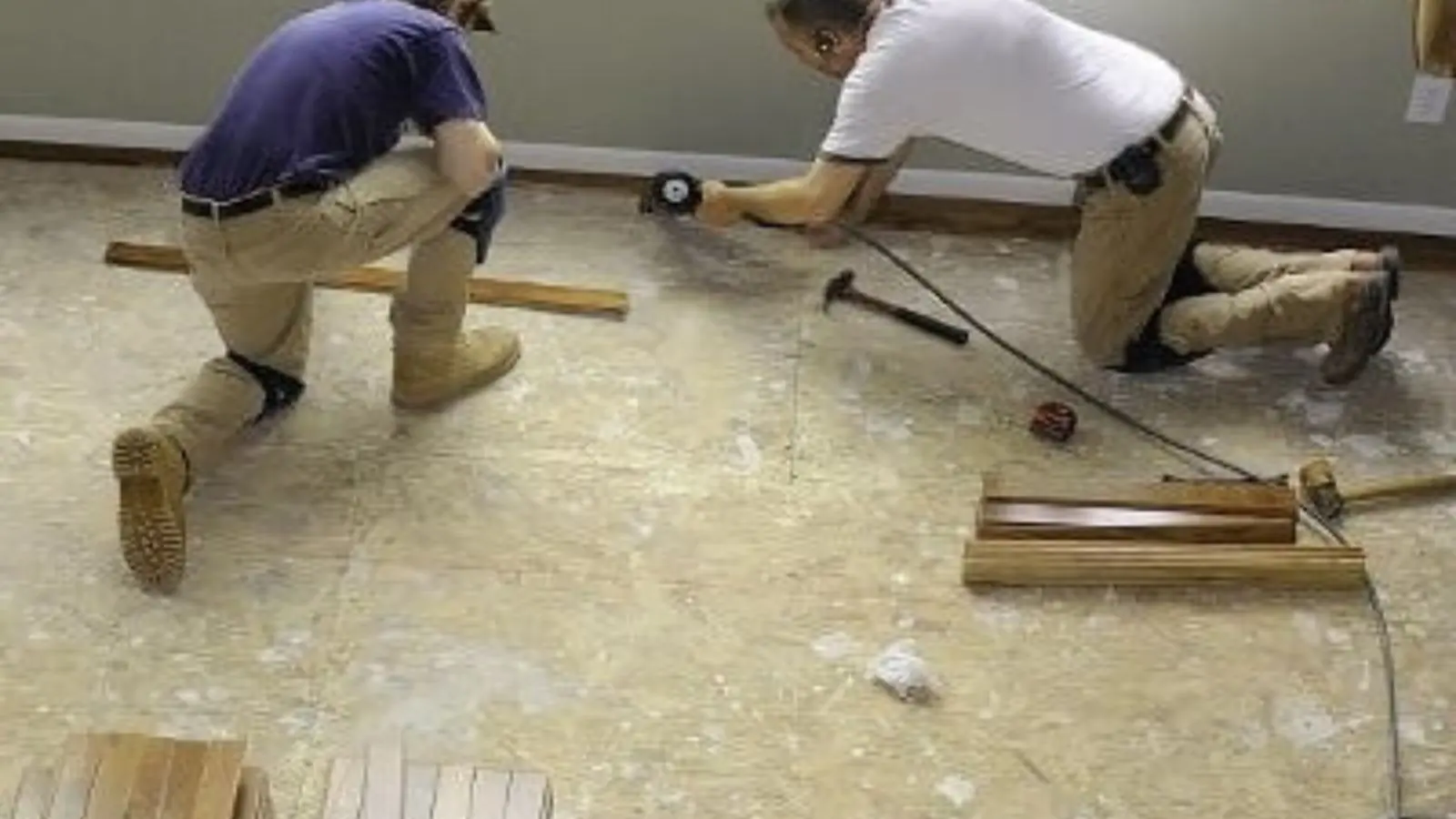
Water damage repair is the rebuild that follows once the water is stopped and the structure is dry. It means cutting out ruined drywall, replacing insulation and baseboards, fixing floors, and repainting so the room matches what it was before the loss.
If you are searching for water damage repair in Indio, CA, settle one question first: is anything still wet? Repairs sealed over damp framing are the ones that stain and smell again. Moisture readings answer that question, and the answer sets the order of the whole job.
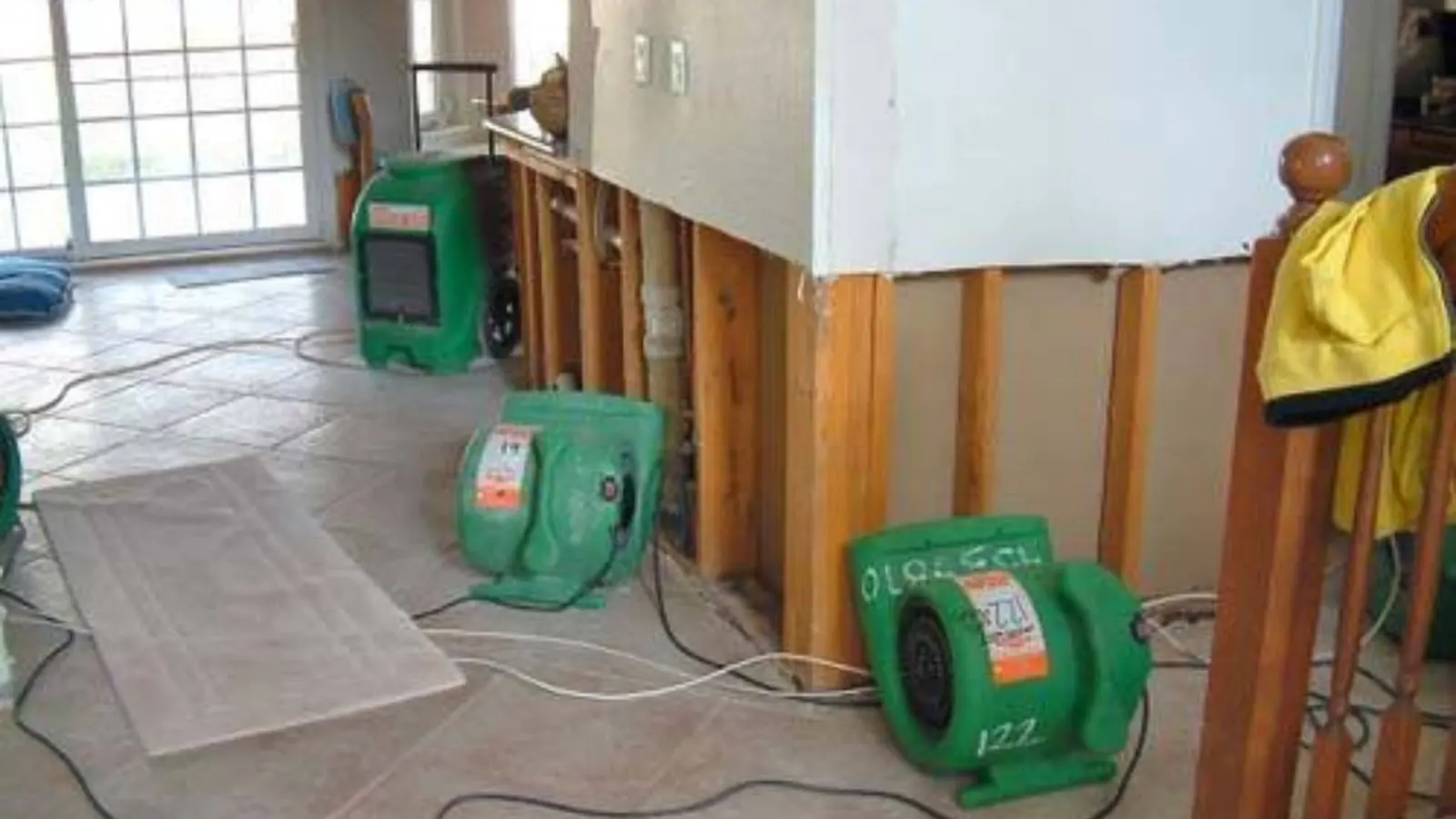
Signs the damage needs repair, not just drying
Some water damage dries out and disappears. Other damage stays behind as a record of what happened: a brown ring on the ceiling, a wall that feels soft near the baseboard, floorboards that no longer lie flat. Those are repair jobs, and they follow a predictable pattern.
Look for these before you call:
- Brown or yellow stains that return after painting, which usually means moisture is still moving through the material or was never fully dried.
- Drywall that feels soft, crumbles at the edge or shows bubbling paper facing.
- Paint that blisters or peels in sheets, often in a pattern that follows the path of the leak.
- Baseboards or door trim that swell, split or pull away from the wall.
- Flooring that cups, gaps, lifts at the seams or squishes underfoot.
- A ceiling that sags between joists. Stay out from under it and call before touching it.
- A musty smell that lingers after the leak was fixed.
Stop before you paint
Stain-blocking primer over a damp or moldy surface hides the problem and traps it. If the area smells musty or shows growth, mold remediation should be handled before any finishing work.
Ceiling and wall water damage repair
Ceiling repair starts above the ceiling. The crew finds the source, checks the insulation sitting on top of the drywall and reads moisture around the stain with a meter, because the visible brown ring is almost always smaller than the wet area. Drywall is then cut back to dry, solid material, and wet insulation is replaced.
A new piece of board of the same thickness goes in, taped and finished with joint compound, then textured to match the surrounding ceiling. Knockdown, orange peel and smooth finishes each take a different technique, and a patch that does not match shows every time afternoon light rakes across it. If the texture is decades old, ask whether it should be tested before sanding or scraping.
Wall repair follows the same logic from the floor up. Water wicks upward through drywall like a candle wick, so the cut line sits above the visible water line and the stud cavity must read dry before new board closes it in. Stain-blocking primer goes on first, and the paint is carried to a natural break such as a corner so the repair does not show as a square.
When the water came from the roof
Roof leaks cause a large share of ceiling and wall repairs, and the sequence matters. Water is stopped at the roof first, with a tarp or a permanent fix, then the interior is dried, and only then is the ceiling rebuilt. Painting over a stain before the roof is sealed just schedules the next stain.
Roof repair itself belongs to a roofer, and we say so plainly. What we handle is the inside: wet insulation and framing go through water mitigation before any drywall closes the ceiling, and the finish work follows once the roof is sealed. Keep a written note from the roofer, because it helps if you file an insurance claim.
Hardwood floor cupping and drying
Cupping happens when the underside of a board absorbs more moisture than the top, so the edges rise and the center dips. It is common after a slow leak under a kitchen or a failed supply line, and it can show up days after the water is gone.
The rule is to wait. Moisture meters compare the damaged floor with an unaffected area of the same floor, and sanding before the readings match locks in a crowned or dished surface. Many floors flatten as they dry, and only the boards that stay distorted are sanded or replaced.
Drying under a floor can take days or weeks depending on board thickness and how long the wood stayed wet, so expect floor work to be the last item on the schedule.
Repair or replace: a decision framework by material
Use this as a starting point. The moisture reading and the water category make the final call.
| Material | Often repaired | Often replaced | What decides it |
|---|---|---|---|
| Drywall | Dry, firm board with a small stain and no sagging | Soft, crumbling, bubbled or sagging board, or wet insulation behind it | Moisture reading behind the board and time spent wet |
| Insulation | Rarely repaired | Batts that stayed wet are removed and replaced | Whether it is damp or compressed |
| Hardwood flooring | Light cupping that flattens as it dries, then refinishing | Buckled boards, dark staining or boards that stay distorted | Moisture readings and board thickness |
| Laminate and engineered flooring | Seldom repaired | Swollen seams and edges usually do not shrink back | Edge swelling and core material |
| Carpet and pad | Carpet may be kept after clean water that was dried quickly | Pad is usually replaced, and so is carpet that touched dirty water | Water category and time wet |
| Tile | Tile itself is usually fine | Loose or hollow tile, or a wet subfloor under it | Tapping for hollow spots and subfloor readings |
| Cabinets | Solid wood or plywood boxes can often be dried and kept | Swollen particleboard and crumbling toe kicks | Material and how high the water reached |
| Baseboard and trim | Solid wood trim that is clean and dry | Paint-grade fiberboard that swells or splits | Material and swelling |
Category 3 water, such as sewage or floodwater, changes the answer. Porous materials that touched it are generally removed instead of repaired.
What moves the price of water damage repair
There is no honest price before someone sees the damage and reads the moisture. These five factors set the number, and the dispatcher will ask about them first. Want your real number? Call the 24/7 line and describe the loss.
Water category
Clean supply-line water leaves more materials worth keeping. Category 2 and 3 water means more removal and more rebuilding.
Affected area
One stained ceiling panel and a whole wall run are different jobs. Square footage, ceiling height and the number of rooms set labor and material.
Materials and finish
Texture matching, hardwood species, custom cabinets and tile availability can change the cost more than the water did.
Drying status
Repairs cannot start until readings show the structure is dry, so drying days and the equipment used affect the schedule and sometimes the total.
Rebuild scope
A patch, a full wall and a full room are priced differently, and some scopes may need a permit from the City of Indio.
Describe the stain, the floor or the wall, and the dispatcher will explain what comes first.
☎ (760) 769-1159Insurance and water damage repair
Coverage depends on the cause. Sudden and accidental water damage, such as a burst supply line, is often covered, while gradual leaks and neglected maintenance often are not. The California Department of Insurance says homeowners policies do not cover flood damage but do cover other kinds of water damage, so check your policy or ask your insurer which category your loss falls in.
Keep photos of the damage before repairs, a log of calls with your insurer and the repair scope in writing. California regulations generally give insurers 15 calendar days to acknowledge a claim and up to 40 calendar days to accept or deny after proof of claim, so confirm the current rules with the department. Nothing on this page promises that a claim will be approved.
Permits, licensing and what to ask
The City of Indio says a building permit is required before work begins, with a short list of exemptions, and the Building and Safety Division is the place to ask whether your repair needs one. Ask before the drywall comes down, not after.
California requires a contractor license for work valued at $1,000 or more in combined labor and materials, a threshold that rose from $500 on January 1, 2025. Ask any company about its license, and ask whether its crews work to ANSI/IICRC S500, the published standard for water damage restoration.
After a storm: leaks in Indio walls and ceilings
Storm seasons bring a different kind of repair call. After Tropical Storm Hilary in August 2023, Riverside County proclaimed a local emergency that listed flooding in neighborhoods, business districts and roadways across the Coachella Valley. Rain driven against roof flashing, stucco cracks and window frames can leave stains that appear days later.
Before repairs, find the entry point and close it. The City of Indio storm resources page advises stacking sandbags at doors and low points and shutting off power at the breaker panel if water rises near outlets, and it points to FEMA's Flood Map Service Center to check your address. If runoff entered at floor level instead of through the roof, see flood damage restoration and ask your insurer about flood coverage.
Crews also repair homes in nearby towns such as Palm Desert, where the same order applies: dry first, rebuild second.
Frequently asked questions
Repairs start when moisture readings show the framing, subfloor and drywall are dry compared with an unaffected area of the same home. That is usually a matter of days, but thick materials such as hardwood and plaster take longer. A crew that finishes early on a wet wall is a crew that comes back for the stain.
Not safely. Paint hides the stain, but it does not fix a wet ceiling or a leak that is still active. Find the source, dry the area, replace any soft drywall and insulation, then prime with a stain-blocking primer before the finish coat.
No. Roof repair is a roofer's trade. The work here is the interior: drying wet insulation and framing, cutting out ruined drywall and finishing the ceiling once the roof is sealed. We would rather say that up front than leave you with the wrong expectation.
A good repair matches the texture and carries the paint to a natural break in the wall. Older paint has faded, so painting the whole wall from corner to corner gives a cleaner result than a small patch. Ask how the crew plans to match texture before work starts.
It can. The City of Indio says a building permit is required before work begins, with a few exemptions such as small fences and sheds. Whether a drywall or flooring repair needs one is a question for the city, so ask the Building and Safety Division before work starts.
Sometimes. Sudden and accidental damage is often covered, gradual leaks and neglect often are not, and flood damage is usually excluded and needs a separate flood policy. Check your policy or ask your insurer, and keep photos, moisture readings and written scopes for your claim.