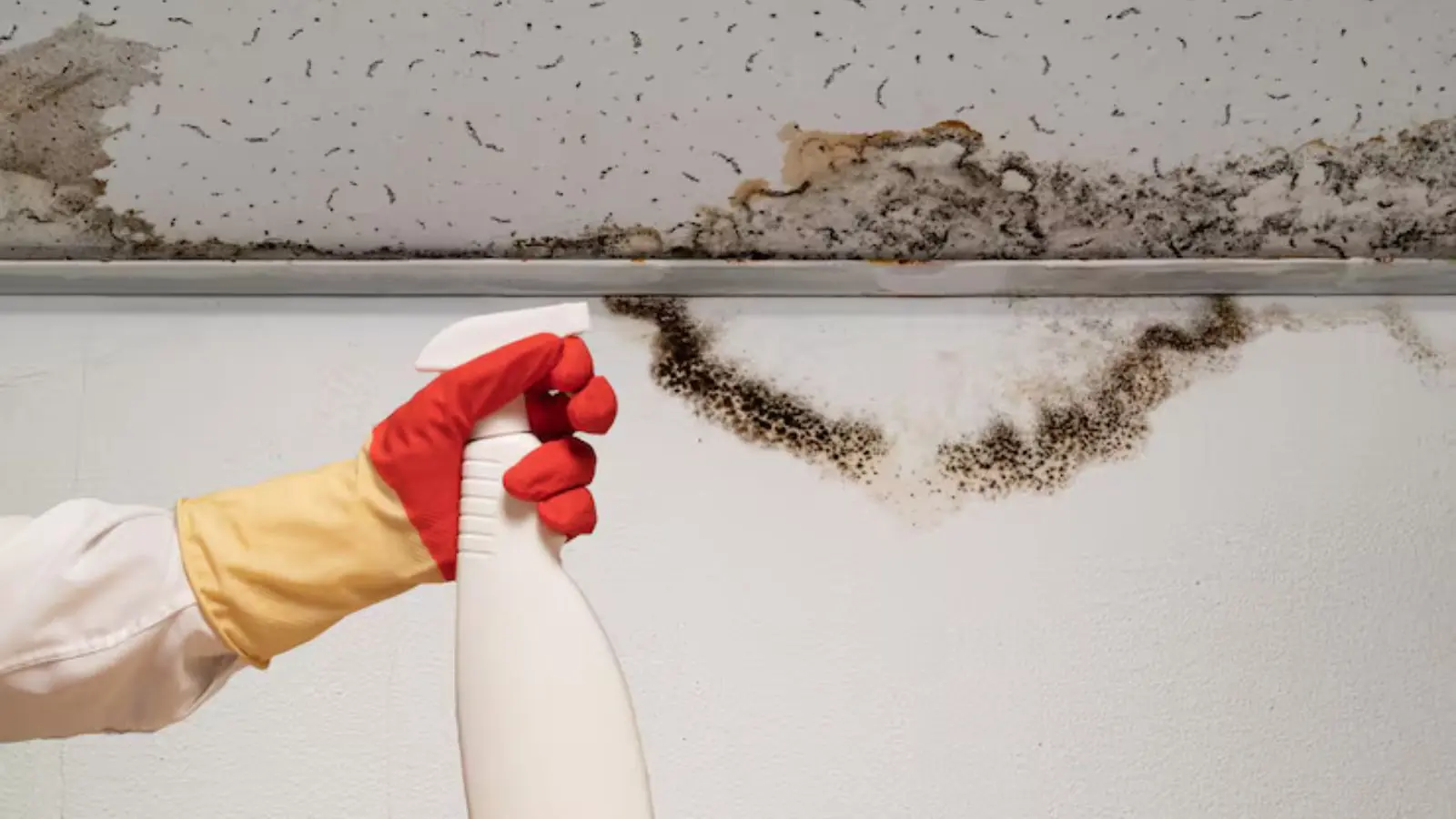
Dark spots on a bathroom ceiling usually mean the ceiling has been damp enough, for long enough, to grow mold. The spots are only the surface. Before any cleaning, find out why the ceiling is damp, because a cleaned ceiling with the same moisture source tends to darken again.
For a few small spots on a painted ceiling with an obvious cause, such as a missing exhaust fan, a homeowner can often clean and fix the cause. For spreading growth, a soft ceiling, or a stain that follows a leak from above, a mold remediation crew is the better call. This guide covers how to tell the difference, what the work involves and what to ask before hiring.
Start with the moisture, not the spots
Mold grows where there is moisture, food and time. A bathroom ceiling has the first two built in, since paint and drywall paper are food. What varies is the moisture. Steam from showers that never leaves the room is the most common cause, but it is not the only one.
Check for a supply or drain leak in the space above, a roof leak that reaches the bathroom, a bath fan that vents into the attic instead of outdoors, or a fan that no longer pulls air. If the stain follows a pipe line or sits near the fan housing, that points to the source. If it sits over the shower, the shower itself is the likely cause.
A quick check of likely causes
Go through these before deciding what kind of job this is.
- Does the exhaust fan run, and does the ductwork lead outside rather than into the attic?
- Is there a bathroom, laundry or water heater above the spot?
- Does the spot grow after rain, which would point to the roof?
- Are tile grout, caulk and the shower door sealed?
- Is the ceiling paint peeling, bubbling or soft to the touch?
- Does the spot return a few weeks after cleaning?
What a homeowner can reasonably clean
A small spot on a hard, non-porous surface, such as tile or a glossy painted wall, can usually be cleaned with detergent and water, a rag and gloves. Dry the area afterward and fix the cause so it does not stay damp.
A drywall ceiling is different, because the paper and gypsum are porous. Scrubbing hard can spread the growth and wet the board further. If the ceiling is soft, stained in a ring, or has more than a few small spots, stop scrubbing and have it assessed. Do not mix bleach with other cleaners, and do not run the fan or air conditioner in a way that blows loose material around the house.
What professional remediation looks like
Under the ANSI/IICRC S520 standard, remediation begins by finding and fixing the moisture, then containing the work area so spores do not travel into the rest of the house. The crew uses plastic sheeting and a negative air machine with HEPA filtration to keep air moving into the work zone rather than out of it.
Porous materials with growth, such as ceiling drywall, are cut out and bagged. Surfaces that can be cleaned are cleaned and vacuumed with HEPA equipment, and the area is dried. After the removal, the ceiling is rebuilt with new board, primer and paint. The overall approach is described on the mold remediation page.
Testing and clearance
Some homeowners and lenders ask for independent testing after remediation. An independent tester, who does not do the removal, takes samples or inspects the area and says whether the work meets the agreed standard. That separation of roles protects both sides.
Testing is not required in every case, and it does not replace fixing the moisture. If a sale or a loan is on the line, ask your agent or lender what they require before the work starts, so the right documentation is gathered along the way.
Dark spots spreading on a ceiling? Call to talk through what to check and what comes next.
☎ (760) 769-1159When the cause is a leak from above
If a pipe, tub or roof is sending water through the ceiling, the job is a water damage problem first. The wet materials need drying, and anything that cannot be dried needs removal. The first steps match those on the water mitigation page.
This is also when mold can spread behind the surface, in insulation and the framing. A moisture meter and a thermal camera show where the damp area stops. Without them, a repair can leave a wet pocket that restarts the problem.
Rebuilding the ceiling
Once the growth is removed and the structure is dry, the ceiling is rebuilt like any other drywall repair. New board is hung, joints are taped and finished, and the surface is primed and painted. In a bathroom, a mold-resistant primer and a bathroom-rated paint are common choices.
Fixing the fan matters as much as the paint. A properly vented exhaust fan, sized for the room and run during and after showers, is the most useful habit. Rebuilding work of this kind is covered under water damage repair.
Insurance and paperwork
California Department of Insurance guidance says mold damage caused by a covered peril may be covered under a homeowners policy. A slow leak or lack of maintenance is often excluded. Check your policy or ask your insurer, and photograph the area before anything is cleaned.
Keep a record of who you spoke to and when, plus any test reports and invoices. Ask the crew for a written scope that says what was removed and what was cleaned.
Water damage in Indio: licensing and mold
The California Department of Public Health states that California has no state licensing or regulations for mold assessors or remediators. That means you cannot rely on a state mold license to screen a company. Ask how the crew follows the S520 standard, what training the technicians have, and how containment is handled.
The California Contractors State License Board requires a license for work valued at $1,000 or more in labor and materials, a threshold that rose from $500 in 2025. A ceiling removal and rebuild often reaches that level, so ask for the contractor license for the part of the work that involves construction. Dark spots in a bathroom are a good reason to call even if the job is small, since the right questions up front save time.
Frequently asked questions
You cannot tell by color alone. Several kinds of mold and plain dirt or soot can look dark. Treat any growth as a sign of moisture and have the area assessed. Only testing by a qualified person identifies a type.
No. Paint does not remove growth, and it covers the stain while the moisture keeps working. Clean what can be cleaned, remove what cannot, fix the cause and then paint.
It can if the moisture source is not fixed. Remediation removes the growth, but a leak, a dead fan or high humidity can bring the conditions back. Fixing the source is part of the job.
A physician. A restoration company can tell you about the building but not about your health. If someone in the home has a medical concern, talk to a doctor and mention the situation.
The state's public health department says there is no state licensing for mold assessors or remediators. Ask about the S520 standard, containment, who handles testing, and whether the company holds a contractor license for construction work over $1,000. The same questions apply in Indian Wells and Thermal.