Carpet that got wet can often be saved if the water was clean, the carpet was extracted quickly and the pad and floor underneath are dried properly. If the water was dirty, such as sewage or storm runoff, or if the carpet stayed wet for several days, replacement is the safer call. The pad underneath is the part most likely to be thrown out either way.
The decision is not about how the carpet looks. A wet carpet can look fine on top while the pad holds water against the subfloor. In Indio homes, where a failed washing machine hose, a leaking water heater or a storm-driven roof leak can soak a room in minutes, three questions matter: what kind of water it was, how long it has been there and what is under the carpet.
Step one is the water, not the carpet
Restoration professionals sort water into three categories under the ANSI/IICRC S500 standard. Category 1 is clean water from a supply line or an overflowing sink. Category 2 carries some contamination, such as washing machine discharge. Category 3 is grossly contaminated, like sewage or floodwater from outside.
Clean water on carpet is the best case, and most carpet can be dried in place when extraction starts quickly. Category 2 water may allow cleaning and drying but often calls for removing the pad. Category 3 water means the carpet and pad come out, because they cannot be made safe again. Water that started clean can also slide down a category if it sits, which is why a quick call matters.
Why the pad decides the repair
Carpet is a thin surface layer. The pad below it is a sponge, and it holds far more water than the carpet fibers do. Pad is also cheap compared with the carpet, so removing and replacing it is a normal part of a salvage job rather than a sign that the job went badly.
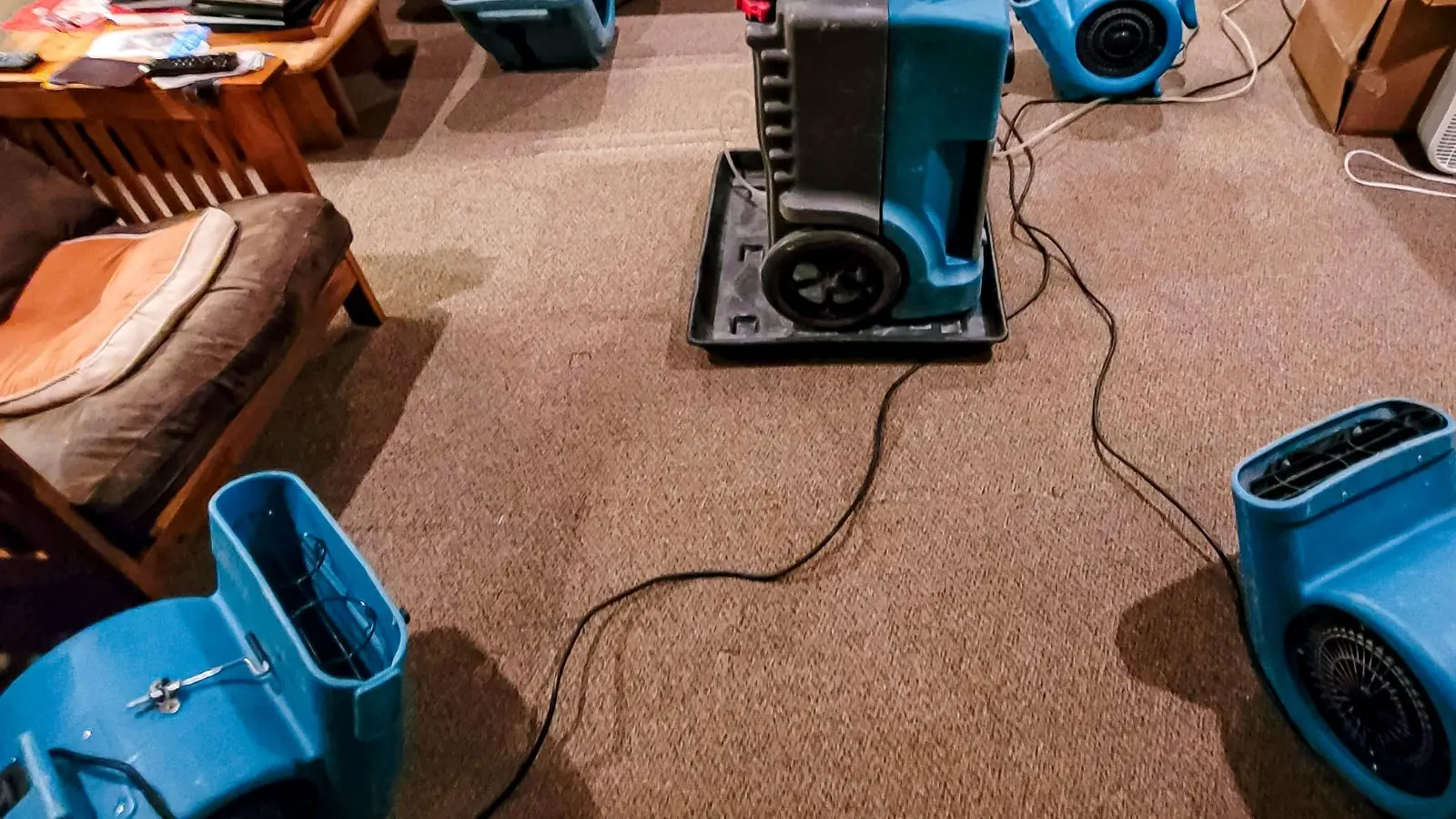
Technicians lift a corner of the carpet, pull back enough to remove the wet pad and set air movers to blow across both the back of the carpet and the exposed floor. This is a method of drying the carpet while keeping it, called floating or lifting. It works best when the carpet is still tacked down only at the edges, and the backing is intact.
Signs the carpet is a keeper
These are the conditions that usually let a crew dry carpet in place and keep it.
- The water came from a clean source such as a supply line, a faucet or an appliance feed.
- Extraction started within a day or so of the loss.
- The backing has not delaminated or started to separate from the fibers.
- There is no musty smell after the carpet has been pulled back and checked.
- The floor beneath reads dry on a moisture meter after drying.
- The room is not part of a larger loss where walls and baseboards also need to come out.
Signs it should go
A single one of these can be enough to recommend replacement.
- The water was Category 3, from a sewer line, a toilet overflow or outdoor flooding.
- The carpet stayed wet for several days with no airflow.
- The backing has pulled apart, or the carpet smells sour once lifted.
- Visible discoloration, staining or mold growth on the back or on the pad.
- The carpet is old enough that stretching it back is likely to damage it.
What happens to the floor underneath
The surface under the pad matters as much as the carpet. If it is concrete, the slab can hold moisture and release it slowly, so the crew checks it with a meter and keeps air movers and dehumidifiers running until it reads normal. If it is wood subfloor, water can swell the boards and run through gaps to the framing below.
Tack strips at the room edges are also wood. They can stain and hold moisture after the carpet is lifted. Technicians check them and replace them if they are wet. This is the kind of detail a surface-level dry-out misses, and it is why a thermal camera and a moisture meter are used before anyone declares the floor dry.
What to do before the crew arrives
These small steps keep a manageable loss from becoming a larger one.
Stop the source
Shut the water at the fixture or at the main valve. Turn off a failed appliance and unplug it if it is safe to reach.
Get furniture off the carpet
Wood legs stain carpet quickly. Lift furniture onto blocks or move it out, and put foil or plastic under legs that must stay.
Open the air
Run ceiling fans and open interior doors so air moves. Keep the thermostat steady and do not use a household vacuum on wet carpet.
Photograph everything
Take wide and close shots of the wet area and the source, and note the time. These support an insurance claim later.
How the cleanup is done
A crew starts with extraction. A truck-mounted or portable extraction unit pulls bulk water out of the carpet, and a weighted tool pressed along the surface pulls more. Carpet that will be kept is then cleaned and treated with an antimicrobial where the category calls for it.
Drying follows. Air movers go in a pattern around the room, a dehumidifier lowers the humidity so the water leaving the materials has somewhere to go, and meters track the progress each day. The process is explained in more detail on the water damage cleanup page, and the first-day steps overlap with water mitigation.
Carpet soaked and the water still spreading? Dispatch is open all day and all night.
☎ (760) 769-1159Replacement and rebuild
When carpet is replaced, the sequence is simple. The area is dried first, then the subfloor is checked, then new pad and carpet go in. If walls were wet at the bottom, baseboards are pulled and the drywall below the flood line may be cut out and replaced. That rebuild phase belongs to water damage repair.
Many homeowners ask about cost. It varies with the water category, the size of the area, the carpet and pad you choose, how many days the equipment runs and how much of the structure needs rebuilding. Ask for the scope and price to be explained before any work starts so there are no surprises.
Water damage in Indio: who to call about the water itself
If a pipe feeding your home has failed, shut off the valve at the house first. If the leak is on the street side of the meter, the Indio Water Authority provides water service in Indio. Its contact page lists a customer service line for business hours and routes after-hours emergency calls through Police Department Dispatch. That tells you who to ring about the supply while the restoration crew deals with the carpet.
For a sewer backup that is soaking carpet, the Valley Sanitary District serves Indio and surrounding areas and has a Report a Problem page on its website. Sewage on carpet is Category 3, and the carpet and pad are removed. Both utilities are separate from the restoration company, which cleans and dries the inside of the house.
Frequently asked questions
There is no single deadline, because it depends on the water category and the airflow. As a rule of thumb, carpet that has been wet for more than a day or two starts to risk delamination and odor, and carpet that has sat for several days is often replaced. Faster extraction gives you better odds.
You can remove surface water, which helps. But the pad, the subfloor and the cavity behind baseboards stay wet, and a household approach rarely dries them. A meter-guided dry-out is what prevents later mold and odor.
Usually yes. Pad holds water like a sponge, and drying it in place is slow and uncertain. Removing it also lets air reach the back of the carpet and the floor.
Often, when the water was sudden and accidental, such as a failed washing machine hose. Flood damage is generally excluded and needs a separate policy. Ask your insurer and check your policy, and see water damage cleanup for how the work is documented.
Call the Indio Water Authority for the supply side or the Valley Sanitary District for sewer, using the numbers on their own websites. Then call a restoration crew for the inside. Crews also work in La Quinta and Palm Desert, and the same split of utility and restoration applies there.