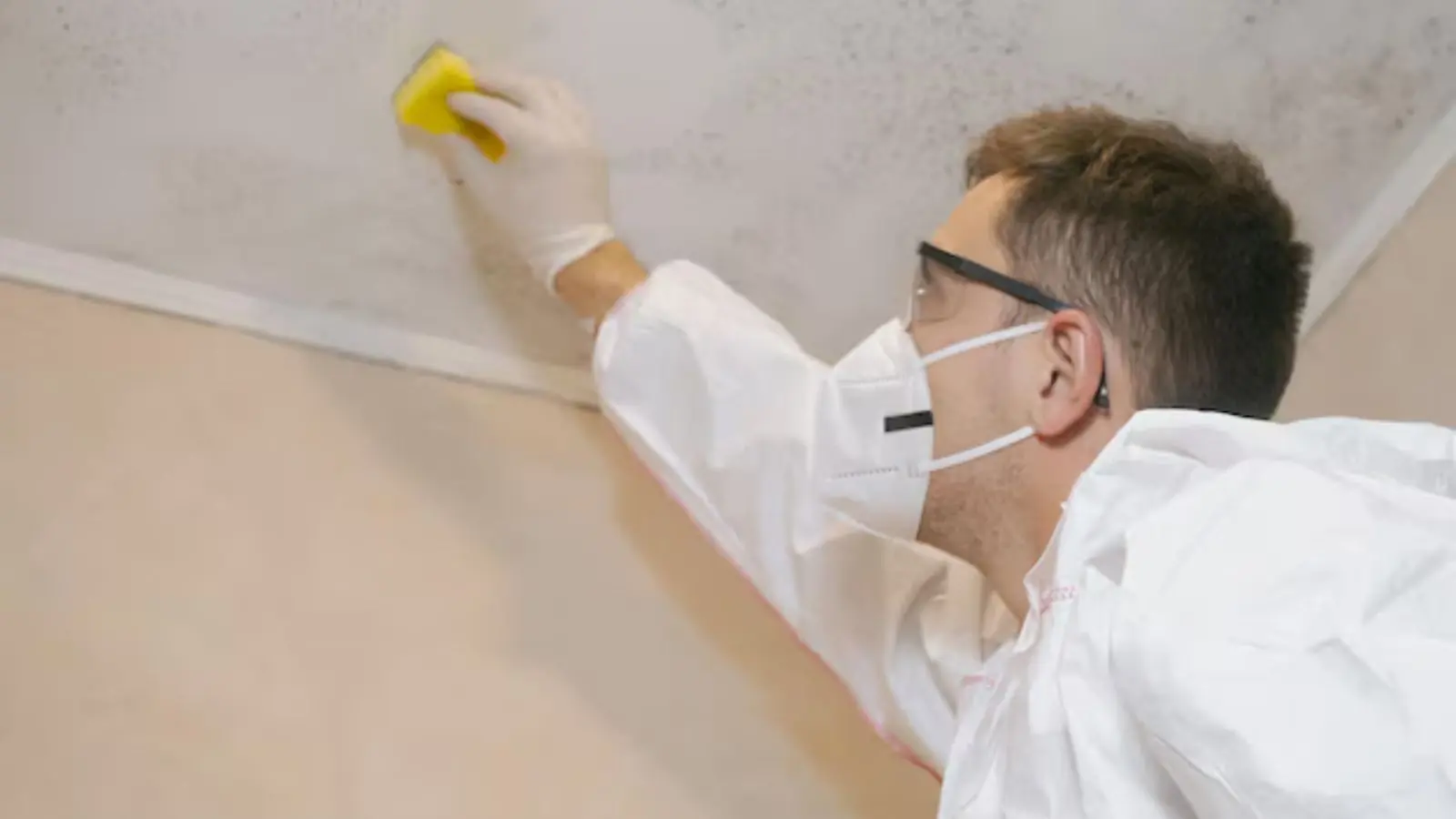
A small, surface-level mold stain on a firm, painted ceiling can often be cleaned with mild detergent, water and a damp cloth, as long as the moisture that fed it has been found and fixed. If the ceiling is soft, sagging, textured, stained again after cleaning or the patch is large, cleaning is the wrong step and containment and removal come first.
Mold needs moisture to grow. A ceiling does not grow mold on its own, so a stain is a clue that water reached it from a roof, a pipe, a vent or condensation. Scrub the stain without fixing the source and it will be back.
This guide covers the source check, a careful cleaning method, the situations where you should not do it yourself and what a professional job involves.
Step zero: find the water
Before anything else, ask where the moisture came from. Common sources above a ceiling include a roof leak, a plumbing line in the floor above, a bathroom exhaust fan that vents into the attic instead of outdoors and an air conditioner condensate line that has backed up. Condensation from a cold surface in a humid room can also do it.
Check the area above the stain, look for fresh water marks and feel for dampness. If the ceiling is wet right now, stop the source first. Active water is a job for emergency water removal, not for a sponge.
Clean it yourself or call a crew?
| Situation | Reasonable to clean yourself? | Why |
|---|---|---|
| Small patch on a firm, painted, hard ceiling that is dry to the touch | Often yes | Surface growth on a sealed surface can be cleaned if the source is fixed |
| Textured or popcorn ceiling | Usually no | Texture absorbs moisture and sheds particles when disturbed |
| Ceiling soft, sagging, stained brown or damp | No | The source may still be active and the material is damaged |
| Stain returns within weeks after cleaning | No | Moisture is still reaching the ceiling |
| Large area or more than one room | No | Containment and removal protect the rest of the house |
| Water involved was sewage, flood or storm runoff | No | Contaminated materials need removal, not cleaning |
| A buyer, lender or landlord requires documented clearance | No | Independent testing after professional removal is the usual route |
How to clean a small patch safely
- Fix the leak and dry the area first. Cleaning a damp ceiling spreads the problem.
- Wear gloves, eye protection and a fitted dust mask, and keep other people and pets out of the room.
- Turn off the HVAC fan serving that room if you can, and cover the supply vent with plastic sheeting to keep dust from traveling.
- Mix mild dish soap into water and dampen a cloth or sponge. Do not soak the ceiling.
- Wipe gently in one direction without scrubbing, and rinse the cloth often in a bucket you will empty outdoors.
- Dry the surface with a clean towel and run a fan or dehumidifier until the room is dry.
- Seal used cloths in a bag and throw them away, then wash your hands and clothes.
- Watch the spot for several weeks. A return means moisture is still present.
Why bleach and sprays disappoint
On a porous surface such as ceiling paper or texture, a spray sits on the top while the growth can extend into the material beneath. The stain fades, the cause stays and the spot reappears. Painting over it with a stain blocker hides color, not moisture.
That is why professionals concentrate on the material, not the color. They remove what cannot be cleaned, dry what can and verify the result, rather than treating the stain.
Ceiling still wet or stained again? The 24/7 line can tell you what to check and arrange a crew.
☎ (760) 769-1159When cleaning is the wrong move
Stop and call when the ceiling is soft, when the stain covers more than a small patch, when the growth is on textured material or when you cannot find the water source. Disturbing a large patch without containment can spread dust through the home.
A professional job under mold remediation usually starts by sealing the work area with plastic sheeting and running air scrubbers with HEPA filtration. Crews remove affected drywall or ceiling material, HEPA vacuum the surfaces, dry the cavity and confirm the area is clean before rebuilding.
The published guide for this work is the ANSI/IICRC S520 standard for mold remediation. Ask any company whether its crews follow it, and ask who performs clearance testing. Independent testing, done by a party that is not selling the removal, is the most credible check.
Questions about symptoms belong to a doctor
This guide covers cleaning and removal, not health. If anyone in your home has concerns about exposure, talk to a physician. Keeping the affected room closed off while you arrange the work is a sensible precaution.
Fix the cause so the repair lasts
Once the ceiling is clean and dry, repair the cause. A vent that dumps into the attic should be ducted outdoors. A leaking roof section or a failing pipe fitting needs a proper repair. A condensate line that backed up should be cleared and checked.
If the ceiling material was damaged, water damage repair covers replacing sheetrock, texturing and paint. If the structure got wet, water mitigation dries the cavity so that the new finish is not applied over trapped moisture.
Homeowners in Indian Wells and Coachella who find ceiling stains follow the same order of work: source, drying, removal, repair.
Mold rules in California: local notes
California does not license or certify mold assessors or remediators as a separate trade, according to the California Department of Public Health. Its mold FAQ says the state has no regulations for mold inspection, assessment or remediation. In practice, that puts the burden on you to ask good questions.
Ask about training, ask which standard the crew follows (S520 is the published one), ask who does clearance testing and ask for a written scope. California's Contractors State License Board also requires a contractor license for work valued at $1,000 or more in labor and materials, so ask to see a license number if the job includes tearing out and replacing ceiling material.
If the repair involves rebuilding, the City of Indio says a building permit is required before work begins, with some exemptions. The Building and Safety Division can tell you whether replacing a ceiling needs one.
Frequently asked questions
Mild detergent and water on a small, firm, sealed surface is the safer starting point. Bleach and vinegar often lighten color without dealing with the material underneath, and neither fixes the moisture that caused the growth.
Because moisture keeps reaching it. Look for a roof leak, a plumbing leak above, a vent that does not exhaust outdoors or condensation. Until the source is fixed and the material is dry, cleaning is only a pause.
No. The California Department of Public Health says the state has no licensing or regulations for mold assessment or remediation. Ask any company about its training, the S520 standard it follows and who does clearance testing, and ask for a contractor license number if the job is valued at $1,000 or more.
Not for a small, visible patch you plan to clean after fixing the source. Testing is more useful when the cause is unclear, when removal is large or when a buyer or lender wants documented clearance. If testing is done, independent testing after removal is the most credible kind.
Many people choose to keep the room closed off until the cleanup is done and the ceiling is dry. Questions about symptoms or exposure belong to a physician, and a crew can tell you how they would contain the work area.