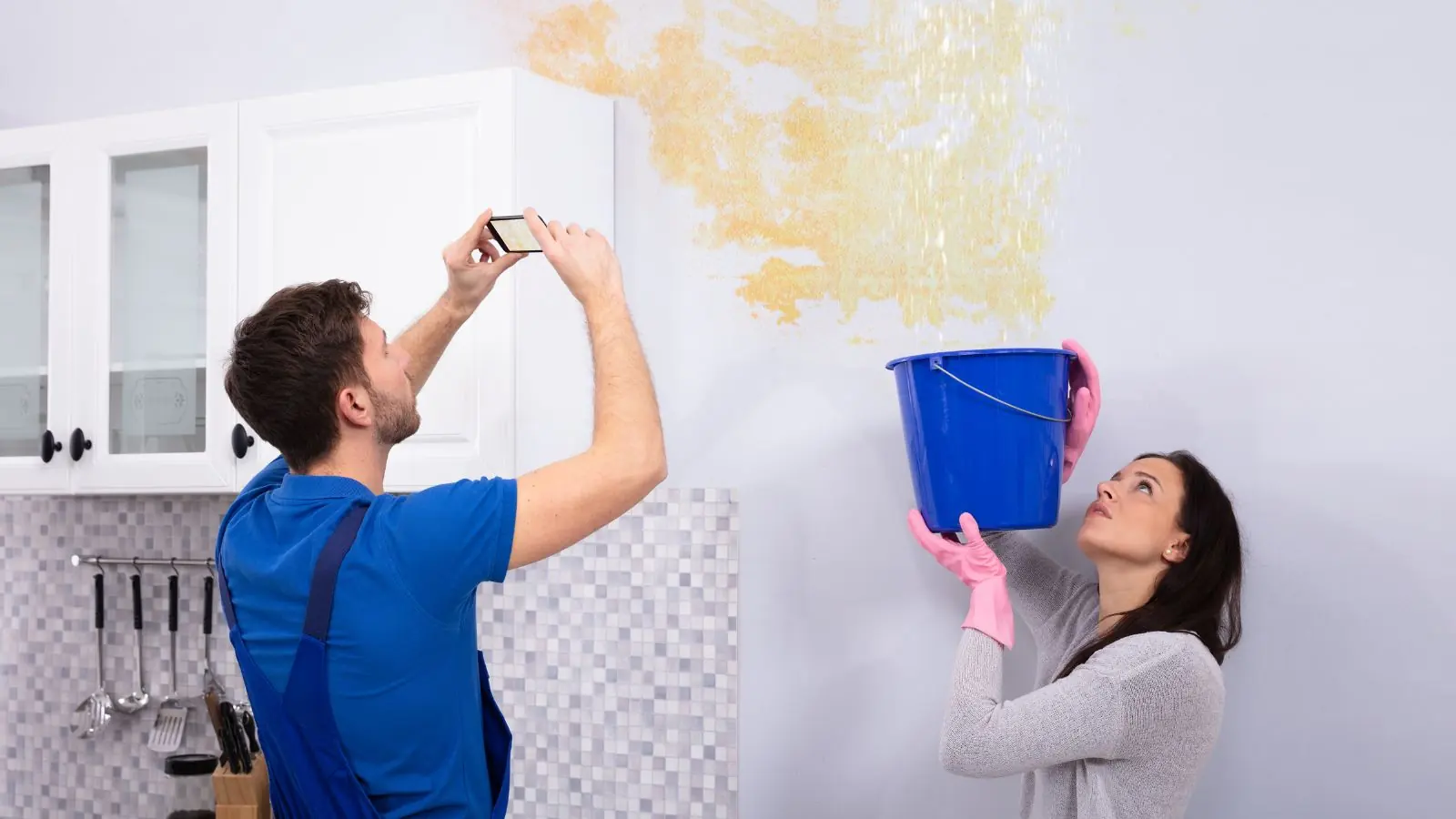
Usually yes, if the water was sudden and accidental. A supply line that bursts, a water heater that ruptures or a washing machine hose that lets go is the kind of loss most California homeowners policies are written to cover. Slow leaks, neglected maintenance and flood water usually are not.
The California Department of Insurance states the flood point plainly: homeowners policies do not cover flood damage, but they do cover other kinds of water damage. Flood protection is a separate policy. Your own policy language decides every edge case, so read it before you assume anything.
This guide explains the line adjusters draw between sudden and gradual water, how flood coverage works, the claim timelines California regulations set for insurers and what to document in Indio before cleanup begins.
How common water losses are usually treated
The table shows general patterns only. It is not a coverage decision, and every policy words these things differently.
| Water source | Homeowners policy usually | What to check in your policy |
|---|---|---|
| Burst supply line or fitting | Covers the sudden water damage, not always the failed part itself | Wording on sudden and accidental discharge |
| Water heater rupture | Often covers the resulting water damage | Exclusions for wear, rust and lack of maintenance |
| Washer, dishwasher or ice maker hose failure | Often covers the sudden release of water | Limits on water damage and any appliance exclusions |
| Slow leak under a sink or inside a wall for weeks | Often excluded as gradual or continuous seepage | How the policy defines repeated or continuous leakage |
| Roof leak after a storm | Depends on the cause and the condition of the roof | Roof exclusions, wear and tear language, storm wording |
| Flood water or runoff entering the home | Does not cover it, flood is a separate policy | Whether you hold a flood policy and when it took effect |
| Sewer or drain backup | Often needs a specific add-on | Look for water backup coverage by name |
Always read the declarations page and the exclusions section, or ask your insurer to explain them in writing.
Sudden versus gradual: the line adjusters draw
Most disputes come down to timing. Water that escapes in minutes or hours from a pipe that fails is sudden. Water that weeps for weeks from a loose fitting or a failing seal is gradual, and many policies exclude the damage it causes along with the repair of the leak itself.
That is why the age of a stain matters. A dark ring with soft, layered edges suggests repeated wetting over time. A single fresh ring on a ceiling with wet drywall suggests a recent release. Photographs taken the day you find the problem, before anything is moved or cut, give the adjuster a record of which one you have.
The California Department of Insurance also warns homeowners never to ignore signs of an obvious water problem. If you find a drip, stop the source and make temporary repairs to prevent more damage. Waiting for an adjuster while the carpet keeps soaking can make a covered loss bigger and harder to defend.
Flood is its own policy
California's insurance regulator says homeowners policies do not cover flood damage, and that flood insurance can be bought as a separate policy. Its Flood Facts page adds that flood policies usually take effect 30 days after purchase. Buying coverage when a storm is already on the radar is too late.
In insurance language, flood generally means surface water coming in from outside, such as runoff or an overflowing channel, and your policy's own definition controls. A pipe bursting inside a wall is not flood, even if the soaked floor looks the same. That difference decides which policy answers the claim.
Use the FEMA Flood Map Service Center to check whether your address is in a mapped flood zone. The City of Indio's storm page sends residents there, and the city's municipal code adopts FEMA's special flood hazard areas by reference.
What to do in the first day
These steps protect both the house and the claim.
- Stop the source. Shut off the main water valve or the fixture valve, and cut power to wet areas only if you can reach the panel safely and dry.
- Photograph and video everything before moving it, including the source, the wet materials and the label plates on damaged appliances.
- Report the loss to your insurer or agent and ask for the claim number. Keep a log of every call and email with the date, the name and what was said.
- Make temporary repairs that stop more damage, such as lifting soaked carpet pad or covering a roof opening, and keep every receipt.
- Hold on to damaged materials until the adjuster has seen them, or photograph them thoroughly if they are unsafe to keep.
- Call a crew for emergency water removal so the structure stops absorbing water while the claim moves forward.
California claim timelines
California regulations generally give an insurer 15 calendar days to acknowledge a claim after notice, and up to 40 calendar days to accept or deny it after receiving proof of claim. An insurer that needs more time is expected to send written updates, commonly every 30 days.
These rules come from sections 2695.5 and 2695.7 of Title 10 of the California Code of Regulations, as summarized in a Department of Insurance guide for adjusters.
Those are general rules, and special ones can apply after a declared disaster. If your insurer goes quiet, the Department of Insurance runs a consumer hotline and publishes a residential claims guide at insurance.ca.gov. Keep your call log handy when you contact them.
Water is still spreading? The 24/7 line is open, and the dispatcher can tell you what to shut off and photograph.
☎ (760) 769-1159Where a restoration company fits
A restoration company does not decide coverage. Your insurer does. What a crew can do is stop the damage from growing and produce records an adjuster can use, such as moisture readings, thermal images, equipment logs and a written scope of work. Water mitigation is the stage that stops the loss, and water damage cleanup removes the wet materials that cannot be saved.
Ask any company to explain its scope and price before work starts, and ask whether its crews follow the ANSI/IICRC S500 standard for water damage restoration. Do not sign anything that promises your claim will be approved, because no contractor can promise that.
The same documentation habits apply for homes we serve in Coachella and Palm Desert, where claims follow the same California rules.
Mold and your claim
The Department of Insurance notes that mold damage caused by a covered peril may be covered under a homeowners policy. When wet drywall sits for days, mold can follow and the claim gets more complicated, so fast drying protects the house and the file. If growth is already showing, read how containment and clearance work on the mold remediation page.
Insurance and water in Indio: local notes
Flood exposure in Indio is documented, not theoretical. A FEMA public notice posted in November 2024 describes how floodwaters from Tropical Storm Hilary in August 2023 eroded the Coachella Valley Stormwater Channel and damaged the city's Westward Ho water main, at a site FEMA places inside a Special Flood Hazard Area.
For a homeowner, the lesson is practical. Look up your own address on the FEMA map and read your policy for flood language before the next storm, not after it.
More recently, local TV reported flash flooding on Dillon Road in Indio Hills on September 28, 2026, along with a National Weather Service flash flood warning that named Indio among the covered communities. Indio Hills is a separate area north of the interstate, so treat that event as a reminder to check coverage, not as a record of flooded homes in the city.
Indio Water Authority supplies drinking water in Indio, and Valley Sanitary District serves Indio and surrounding areas for sewer. Check your bills to see which agencies serve your address. Those agencies handle problems in the public lines, while your insurer handles damage inside the house.
Frequently asked questions
California regulations generally give insurers 15 calendar days to acknowledge a claim and up to 40 calendar days to accept or deny it after proof of claim. Exceptions exist, especially after declared disasters, so confirm the current rules with the California Department of Insurance if your claim stalls.
Often not. Many policies exclude continuous or repeated seepage and the wear that caused it, while still covering sudden releases. Document when you first noticed the problem and ask your insurer how your policy defines gradual damage.
Generally no. The California Department of Insurance says homeowners policies do not cover flood damage and that flood insurance is a separate policy, usually effective 30 days after purchase. Check your address on the FEMA Flood Map Service Center, and ask your agent whether flood coverage makes sense for your home.
No. The Department of Insurance advises making temporary repairs to prevent further damage. Photograph and video the loss first, keep receipts and keep damaged items the adjuster may want to see. Standing water that waits days usually costs more to fix.
It may be. The Department of Insurance says mold damage caused by a covered peril may be covered under a homeowners policy, though policies often limit mold coverage. Read your policy and ask your insurer, and see mold remediation for what the removal process involves.