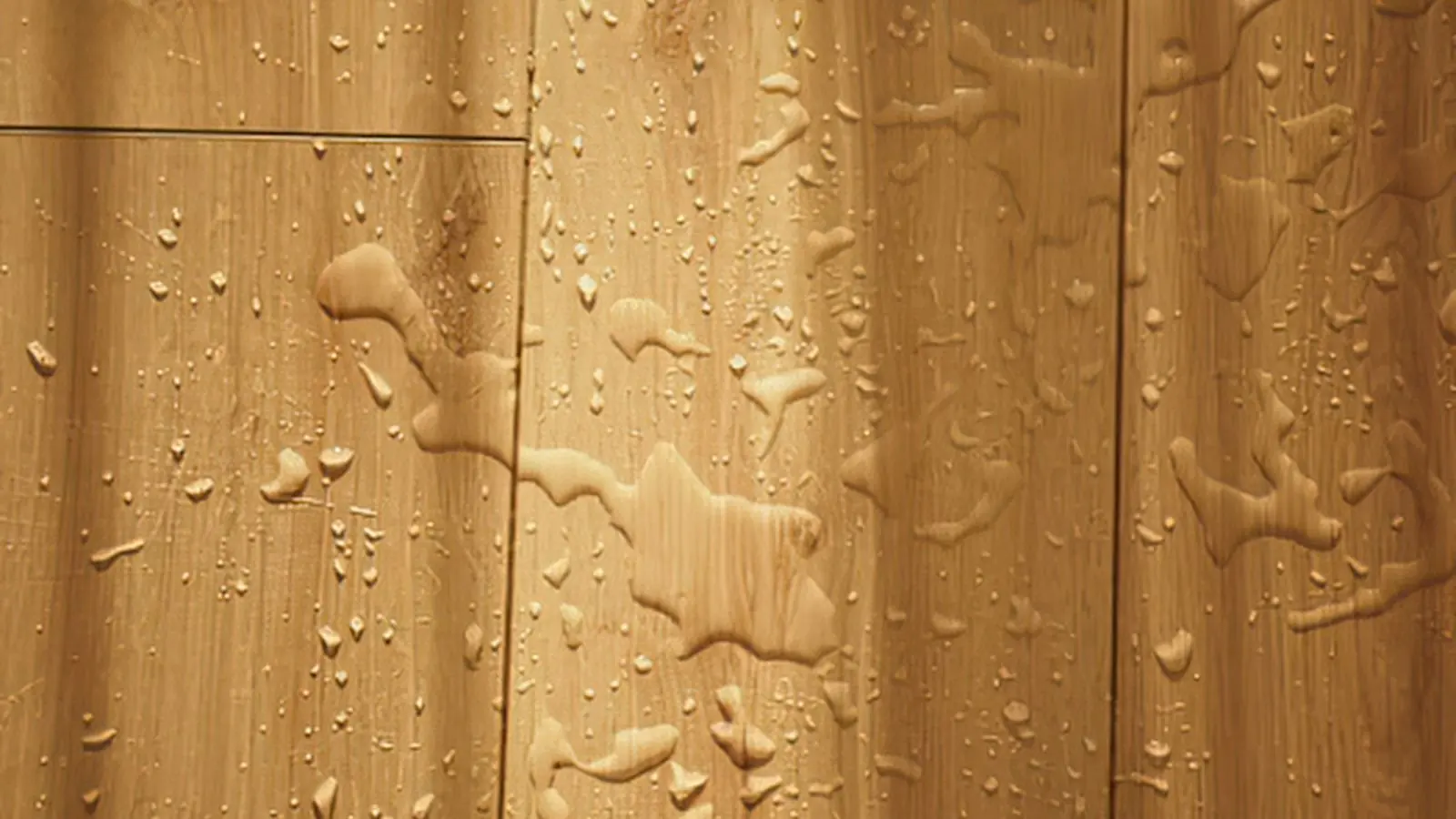
To fix water damaged wood, stop the water, dry the wood completely, and only then decide whether to sand and refinish it, repair it in place or replace it. Wood that is still wet cannot be fixed, because it keeps moving as it dries. Solid boards often flatten once they reach a dry reading. Swollen particleboard, MDF and delaminated plywood rarely recover.
The sections below sort the common cases: hardwood floors, subfloors, framing and furniture. There is a decision table, a plain-language guide to moisture meter readings, and the point at which a repair becomes a job for a licensed contractor in Indio, CA.
Drying comes before every repair
Wood is a sponge with a grain. Water travels along the grain faster than across it, which is why a leak at one end of a floorboard can wet the whole length. Sanding, filling or staining a board while it holds moisture traps that water inside and invites cupping, cracked finish and mold.
Professional drying uses air movers to push dry air across the surface and LGR dehumidifiers to pull moisture out of the room. For floors, crews sometimes add drying mats or small holes in the toe kick so air reaches the cavity underneath. The goal is not a dry surface. The goal is dry wood all the way through.
If you can only do one thing before help arrives, shut off the water source and lift anything that sits on the wood. Rugs, boxes and furniture feet hold water against the grain and leave dark stains that are harder to sand out later.
The first day, in order
- Shut off the water at the fixture valve or the main, and turn off power to wet areas only if you can reach the panel without standing in water.
- Pull up rugs, boxes and furniture so the wood can breathe, and wipe standing water from the surface with towels.
- Photograph the damage from several angles before anything is moved or removed.
- Call the 24/7 line so a crew can map the moisture and start extraction and drying.
- Keep the air conditioning running and open interior doors for airflow unless a crew tells you otherwise.
Dry, refinish, repair or replace: a decision table
Use this as a first sort. A moisture reading and a close look at the boards confirm each call.
| What you see | What it usually means | Likely path |
|---|---|---|
| Solid hardwood edges raised, center low (cupping) | Boards absorbed water from below and swelled at the bottom | Dry fully, wait, then sand and refinish if it flattens |
| Solid hardwood center raised (crowning) | Often an over-wetted floor that was sanded too soon after drying | Let the floor settle, then re-sand |
| Black or dark staining along seams | Water sat on the finish or under it for a long time | Spot repair or board replacement, since sanding may not remove it |
| Engineered or laminate planks lifting at edges | Core layer swelled, and the layers are separating | Replace the affected planks |
| Soft, spongy subfloor that gives underfoot | Fibers are saturated or breaking down | Cut out and replace the damaged section |
| Framing studs or joists, wet but firm | Wood is wet but structurally intact | Dry in place and verify with readings |
| Furniture with swollen veneer or crumbling particleboard | Core material cannot return to size | Replace, or repair only if it is solid wood |
A written assessment from a restoration professional is the way to confirm which row applies to your home.
Hardwood floors: cupping, crowning and patience
Homeowners usually want a date for repair. A hardwood floor does not give one. After a leak, boards may cup for days while they release moisture, then flatten partway on their own. Crews take readings every day until the floor matches a dry reference reading from unaffected wood in the same house.
Only then is it worth deciding between refinishing and replacement. If the boards lie flat enough to sand, refinishing is the cheaper and more uniform fix. If they stay cupped or the finish has failed along seams, replacing boards or whole sections is the better call.
When a spot repair is enough
A few damaged boards can be cut out and replaced, and the new boards blended into the finish. Stain color rarely matches perfectly, so expect to refinish the entire room if the damage sits in the middle of it.
When the whole floor has to go
If water spread under an entire floor, or the boards are glued down over a slab that stayed wet, tearing out and starting over is often the honest answer. A restoration crew can explain that choice with readings in hand.
Reading a moisture meter in plain words
A moisture meter gives a number, but the number means nothing alone. What matters is how it compares with a dry reference from the same material in the same house, and which way it is moving day to day.
Reading matches the dry reference
The wood has reached its dry goal. This is the signal that drying can stop and repair planning can start.
Higher than reference but falling
Drying is working. Keep the equipment running and keep taking daily readings until the numbers meet the reference.
Higher than reference and not moving
Something is still feeding the wood or trapping moisture. That could be a slow leak, a wet cavity or a material that needs to be opened up.
One hot spot in a dry area
A local pocket usually means water collected behind a baseboard, under a cabinet or inside a wall. It needs a closer look before any repair.
Subfloor and framing: where structure takes over
A subfloor that has been wet a short time often dries in place, but one that has swelled, delaminated or gone soft is a structural concern. Replacing it is a carpentry job, and in California work valued at $1,000 or more in combined labor and materials needs a licensed contractor. Verify the license with the state before you sign.
Wall studs and floor joists are usually the toughest members in the house. If they are wet but solid, crews dry them with air movers and verify with readings. Rot is a different story. Wood that has stayed wet for long periods can break down, and a probe test with a screwdriver tells a trained eye where the sound wood stops.
For rebuilding after drying, water damage repair covers the replacement of flooring, drywall, insulation and trim once readings are clean.
Wood is cupping or the floor feels soft? Call the 24/7 line and describe it so a crew can read the moisture.
☎ (760) 769-1159Furniture and cabinets: solid wood or veneer
Solid wood furniture has a good chance after drying. Legs, tabletops and chair frames usually dry out, and light water rings often come out with refinishing. Veneer and particleboard are a different story. The core swells, the veneer lifts and the piece does not return to its shape.
Kitchen and bath cabinets sit on the front line of plumbing leaks. A cabinet box made of solid plywood can sometimes be dried and saved. A particleboard box that has swelled at the base is generally replaced. Remove the toe kick and look inside the cabinet before you decide, since the damage often hides there.
When mold is part of the picture
Wood that stays wet for several days can grow mold on its surface and in seams. Dark fuzzy patches, a musty smell and stains that return after cleaning are clues. Mold needs moisture, so the first step is always to find and remove the moisture source.
If you see mold on or inside the wood, do not sand it. Sanding spreads dust through the house. Testing and removal for mold follow ANSI/IICRC S520, and the mold remediation process includes containment before any removal begins.
Who handles this near Indio
Crews dispatch from Indio to the rest of the valley. In La Quinta and Palm Desert, the same dry-first process applies, whether the wood is a hardwood floor, a built-in cabinet or a framing member behind drywall.
Repairing water damaged wood in Indio: local notes
The City of Indio's Building and Safety Division says a building permit is required before any work begins, with some listed exemptions such as small sheds and low fences. The city's pages do not address water damage repair specifically, so when a repair involves replacing structural wood such as joists, studs or subfloor, ask the Building and Safety Division whether your project needs a permit before you start.
California requires a contractor license for work valued at $1,000 or more in labor and materials, a threshold the Contractors State License Board raised from $500 effective January 1, 2025. That includes the carpentry work to replace damaged wood. Ask for the license number and check it against the state's records before you sign.
Indio Water Authority supplies drinking water in the city. If a supply line near wood is leaking and you cannot shut it off at the fixture, the main valve at the house is your first stop, and the utility is the contact for service on the street side.
Frequently asked questions
Often, yes, if it is solid wood and it dries quickly and completely. Solid hardwood, framing and many furniture frames recover. Swollen particleboard, MDF and delaminated plywood usually do not. The drying readings and a close look at the material decide.
Wait until readings match a dry reference taken from unaffected wood in the same house, and then let the floor settle. Sanding too soon can lock in moisture and lead to crowning or a cracked finish.
The City of Indio says a building permit is required before any work starts, with some exemptions. Its pages do not give a rule specific to water damage repair. Ask the Building and Safety Division whether your project needs one before you remove structural wood.
Outside Indio, in places like Palm Desert, the permit office differs by address, so ask the building department that covers the property.
No. The surface can feel dry while the core is still wet, especially on thick boards and framing. Moisture readings through the material are the only reliable check.
Yes. Flooring, drywall, insulation and trim are part of rebuilding once the structure is dry. Crews can describe the scope on the 24/7 line before you decide on finishes in La Quinta or elsewhere.