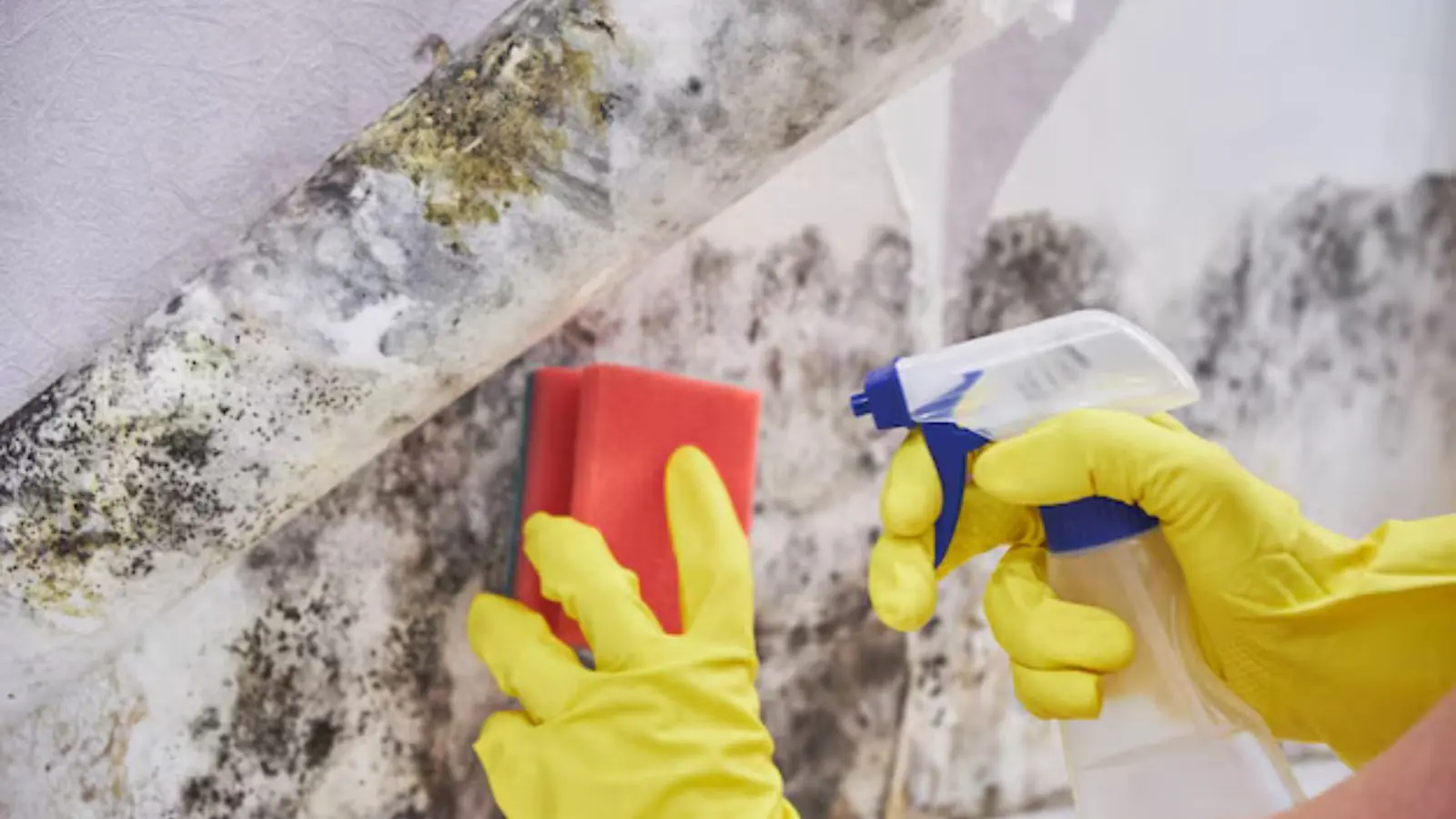
To kill mold for good, remove the moisture feeding it, then physically clean or remove the contaminated material. A spray on a stain looks like progress, but mold that has a damp wall behind it returns. Small patches on hard, non-porous surfaces can be washed with detergent and water. Mold on drywall, insulation, carpet or ceiling tile usually has to be cut out and replaced.
This guide walks through that order for an Indio, CA home: find the water, decide what is a household job, protect yourself and the rest of the house, and recognize when the size of the problem calls for a professional following the ANSI/IICRC S520 standard.
Moisture first, mold second
Mold needs water. Without a damp surface it cannot keep growing, and with one it will regrow no matter what product touched it last. Every mold problem therefore starts with a hunt for the source: a drip under a sink, a roof leak after a storm, a pipe inside a wall, a drain line that overflows or a window that fogs every morning.
Fix that source before anything else. A plumber repairs the pipe. A roofer seals the leak. A dehumidifier and open air can bring a damp room down. If you skip this step, you are cleaning the same patch every few months.
Crews use a moisture meter and a thermal imaging camera to find water hiding behind finishes. Warm surfaces and cool ones show up in a thermal image, and a damp spot reads cooler. That is how a ceiling stain gets traced back to a pipe two rooms away.
Why killing mold is not the same as removing it
Even if a product leaves mold inactive, the dead material is still there. Spores and fragments stay on the surface and in the dust. Removing mold means taking it off or out, not just changing its state.
That is why professional mold work is built around removal and containment. The goal is to bring the material out of the house without spreading it, then clean the area until it is visibly free of growth. A bleached stain is not a finished job.
Porous materials make this harder. Drywall paper, ceiling tile, insulation and carpet absorb moisture and let growth sit inside, where wiping cannot reach. Cutting them out is usually the fix.
Household cleanup or professional job?
| Situation | Reasonable to handle yourself? | Why |
|---|---|---|
| A small patch on tile, glass or sealed metal | Usually yes | Hard, non-porous surfaces can be scrubbed clean and dried |
| Grout lines and shower caulk with surface growth | Often yes | Clean, dry and re-seal, then fix whatever keeps the area damp |
| Dark growth on drywall or a painted ceiling | No, usually | The material is porous and the moisture source is likely behind it |
| Musty smell with no visible source | No | Hidden water often sits inside a wall, floor or ceiling cavity |
| Growth after a flood or a sewage backup | No | Contaminated water changes the safety steps and the scope |
| Large area or repeated return after cleaning | No | Size and recurrence signal a moisture problem that needs mapping |
California has no state mold regulations, so size and cause are the practical guide.
Cleaning a small hard surface safely
For a small patch on a non-porous surface, this is the household method. Stop and call a professional if the patch is larger than you expected, if it sits on drywall or if you cannot find the water source.
- Fix the moisture source and let the area dry before cleaning.
- Wear an N95 respirator, gloves and eye protection, and keep other people and pets out of the room.
- Scrub the surface with detergent and water, and rinse with clean water.
- Dry the surface completely, using a fan and open windows if the weather allows.
- Throw away rags and sponges in a sealed bag, because they carry what you scrubbed off.
- Watch the spot for a few weeks. If it returns, the moisture is still there.
Never mix cleaning products
Bleach and ammonia-based cleaners produce dangerous fumes when combined. Use one product at a time, keep the room ventilated and read the label. If a product label says not to use it on a surface, do not.
Common shortcuts that do not hold up
Painting over it
Paint covers color, not growth or moisture. If the wall stays damp, the stain bleeds through or the paint peels.
Spraying and walking away
A spray on porous material does not reach the roots. The area looks different for a while and then the pattern returns.
Running a fan across it
Air movement can spread spores around the house. Fans belong in a drying plan after containment, not as a first move.
Dry brushing or sanding
Both throw particles into the air. Mold on wood or drywall should be addressed with a plan and containment.
Not sure whether the patch you found is a household job? Describe it to dispatch before you touch it.
☎ (760) 769-1159What a professional does differently
A mold remediation crew begins by finding the moisture source and mapping how far it has spread. The work area is sealed with plastic sheeting, and a HEPA air scrubber runs in negative pressure so air flows into the work zone, not out of it. Materials that cannot be cleaned are cut out, bagged and removed.
Surfaces that remain are cleaned and dried. The crew then rechecks moisture and looks over the area to confirm that growth is gone. Some owners bring in an independent tester to confirm results afterward, which is called clearance testing. Ask whoever does the cleanup whether clearance testing fits your situation.
ANSI/IICRC S520 is the published standard for professional mold remediation. You can ask any company whether its crews follow it. The standard describes containment, removal and verification steps in detail.
When the mold came with water damage
Mold often arrives after a leak or storm that was dried too slowly. If you had a recent water event, water mitigation addresses the drying, and the mold work follows once the source is controlled. Removing mold without drying the structure just resets the clock.
If you are not sure whether a stain predates or follows the leak, document it with photos before anything is cleaned. Your insurer may ask for them, and a crew can use them to judge how long the area has been damp.
A word about symptoms and your physician
People who are worried about symptoms they associate with mold should talk to a physician. This guide cannot diagnose anything, and neither can a cleaning product or a test kit. What a restoration company can do is find and remove the growth and the moisture behind it.
Service around the valley
Dispatch covers Indio and neighboring towns. Homeowners in Palm Desert and Indian Wells can ask the same questions about scope, containment and verification before work starts.
Mold rules in California and Indio: local notes
The California Department of Public Health says California has no state regulations for mold inspection, assessment or remediation, no licensing for mold remediators and no legal requirement for training, licensing or certification of mold assessors. The result is that any company can offer mold work, so ask each one how its crews are trained, which standard they follow and whether they carry the general contractor license that the state requires for jobs of $1,000 or more in labor and materials.
The City of Indio's Building and Safety Division says building permits are required before work begins, with a short list of exemptions. The city's pages do not describe a rule for mold cleanup, so when a project involves removing and rebuilding drywall or framing, ask the division whether a permit applies.
Drinking water in Indio comes from the Indio Water Authority. If a mold problem traces to a supply leak you cannot isolate at the fixture, the main valve at the house stops the water while you arrange the repair.
Frequently asked questions
Nothing sprayed on the surface solves a ceiling problem, because the ceiling material is porous and the water usually comes from above or behind it. Find the leak, dry the area, and have affected drywall cut out. A professional can tell you how much has to be removed.
Both are household products people try on small hard surfaces, but neither fixes a moisture problem or removes growth from porous materials. Never mix bleach with other cleaners, and check the product label before using it on any surface.
It can, and nobody should promise otherwise. Mold needs moisture, so recurrence usually means a source is still active or a material is still damp. Controlling moisture is the real prevention step.
The California Department of Public Health says California has no state licensing for mold remediation. A general contractor license is still required for jobs of $1,000 or more in labor and materials, so ask the company about it, and ask which standard its crews follow.
Dispatch can answer these questions for properties in Indio, and for Indian Wells and surrounding areas as well.
Visual checks and moisture readings come first, and some owners add independent clearance testing afterward. Ask the company what verification it provides before the job starts.