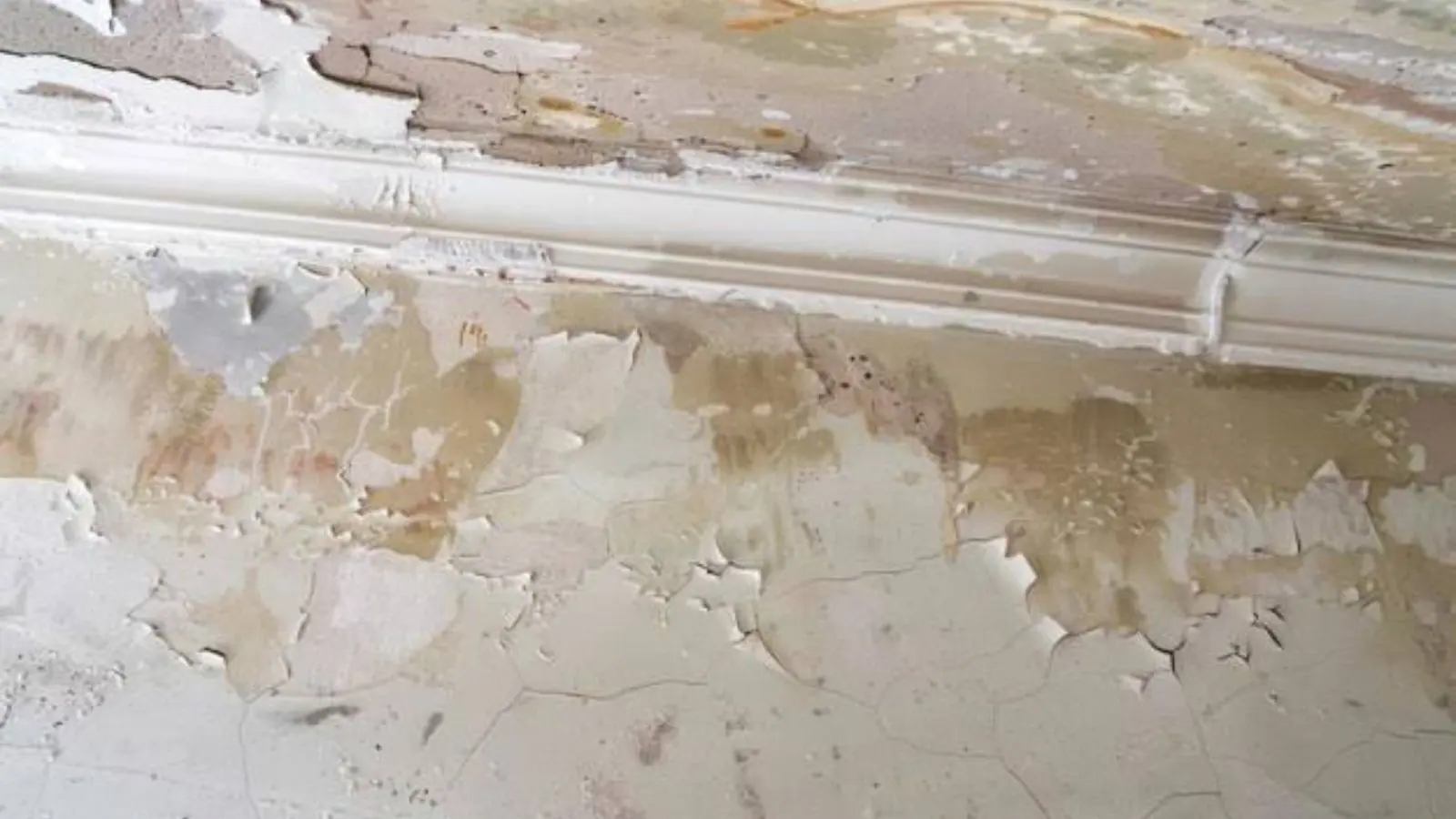
The most common signs of water damage are discolored patches on walls and ceilings, paint that bubbles or peels, floors that cup or buckle, a musty smell that does not go away, and a water bill that climbs with no change in use. Any one of these can be a small, dry history. Two or more together usually mean water is still reaching the building materials.
Not every sign is visible, and the early ones are easy to miss in a house that is cool and dry on the surface. This checklist takes the signs one room at a time, so you can spot trouble in the kitchen, bathroom, laundry, garage and roofline, and decide whether a moisture reading is worth the call.
The room-by-room check
Walk the house once with a flashlight and a notepad. Look, touch and smell, then write down anything that stands out.
| Where to look | What to check | What it can mean |
|---|---|---|
| Kitchen | Cabinet floor under the sink, dishwasher edges, refrigerator water line, flooring near the island | Slow supply or drain leak, failed seal, soft or swollen cabinet base |
| Bathrooms | Grout and caulk lines, baseboard at the tub, base of the toilet, ceiling below an upstairs bath | Seal failure, wax ring leak, shower pan leak |
| Laundry | Hoses behind the washer, floor in front of the machine, drain pan, wall behind | Hose failure, overflow, a leak inside the wall |
| Water heater area | Pan, base of the tank, nearby drywall and flooring, valve connections | Tank corrosion, relief valve discharge, fitting leak |
| Bedrooms and halls | Ceiling stains, baseboards that lift, wall paint that bubbles, carpet that feels cool | Roof leak, plumbing in the wall, slab moisture |
| Garage and exterior | Stains at the garage wall base, stucco cracks, damp spots near downspouts, foundation edge | Roof or drainage problem, irrigation leak near the building |
Take photos of anything you find, with the date, even if you are unsure what it is.
Signs you can see
Stains are the clearest signal. A ceiling or wall stain that is tan or brown, often with a faint ring, means water has been there at least once. Paint that bubbles, blisters or peels in a patch usually means moisture is pushing outward from behind the surface. Drywall that feels soft, crumbles at the touch or has swollen seams has absorbed water.
Floors tell the story too. Hardwood and laminate planks that cup at the edges or buckle in the middle are reacting to moisture below. Tile with hollow-sounding spots or loose grout can mean water under the setting bed. Baseboards that separate from the wall, doors that suddenly stick and wallpaper that lifts at the seams are all small flags that add up.
Signs you can smell or hear
A musty, earthy smell in a closed room, cabinet or crawl space often points to damp materials even when nothing looks wrong. If the smell is stronger when the air conditioner starts, check the condensate line and the area around the air handler. Sewage or sulfur odors from a drain call for a different response and are best handled by a professional.
Sound can help. A faint hiss behind a wall, a pipe that ticks when no one is running water, or a running sound when every fixture is off may be a leak under pressure. A quick test is to turn off every appliance and check whether the water meter dial still moves.
Signs hiding in the paperwork
Some of the best clues come from habits and records rather than from the walls.
- A water bill that rises for two or more cycles with no change in how you live.
- A water meter that keeps turning with every fixture and appliance off.
- An irrigation system that runs longer than programmed or leaves one zone constantly wet.
- A repair history that includes a patched ceiling stain that came back.
- A home inspection report that notes high moisture readings or past leaks, even if they were marked as resolved.
What to do when you find a sign
Start with the source. If water is active, close the nearest shutoff or the main valve and call a restoration crew. If the sign looks old and dry, a moisture meter can tell you whether the materials are still wet inside, and a thermal camera can scan walls without cutting them open.
Do not paint over a stain or caulk over a suspected leak until the area has been checked. Fresh paint hides the evidence and traps moisture, and an old stain can be a clue to a leak that is still working. The quick first-day approach is outlined on the water mitigation page.
When a sign is an emergency
Water running down a wall, a ceiling that sags, water near electrical outlets or panels, or any sewage backing up is an emergency. Shut off water at the main valve and turn off power only if you can reach the panel while standing on dry ground. If you smell gas or see sparking, leave the building and call 911 first.
Found one of these signs and not sure what it means? Dispatch is open day and night.
☎ (760) 769-1159How restoration crews confirm hidden damage
A crew starts with a visual check and then uses a moisture meter on drywall, baseboards and flooring. A thermal imaging camera can show cool, damp patches behind a wall. The crew records the readings, usually in a map or log, and compares them with a reading from a dry area of the same material.
If walls are wet, small inspection holes or flood cuts at the base let the crew see the insulation and framing. Wet insulation and drywall that has lost its strength are removed, and equipment goes in to dry the rest. The cleanup and removal side of that work is covered on the water damage cleanup page.
If the damage has been there a while
Moisture left alone can lead to mold. Mold needs a moisture source, and the longer a leak runs, the more likely a spot behind a wall or under a sink becomes a mold problem. A visible dark patch or a persistent musty smell is the cue to have it assessed.
Mold work is handled under a separate standard, ANSI/IICRC S520, and it starts by fixing the moisture. The details are on the mold remediation page. A water damage crew can often assess both at the same visit.
Water damage in Indio: after storms and floods
California Department of Insurance guidance for homeowners warns not to ignore indications of an obvious water problem, and that applies in Indio after any heavy rain.
Local TV reported that the National Weather Service issued a flash flood warning including Indio on September 28, 2026, with flooding reported that night in the Indio Hills area. The practical tie-back is simple: after a storm like that, walk the house and the exterior the next morning rather than waiting for a stain to appear.
The City of Indio storm page advises stacking sandbags at doors and low points where water could enter a home, and shutting off electricity at the breaker panel if water rises near outlets. Those two steps matter most when you spot a sign in the garage or at a doorway. To see whether your address sits in a mapped floodplain, enter it in the FEMA Flood Map Service Center, which the city's page links to.
Frequently asked questions
Often it is a smell or a change in a water bill, not a stain. A musty odor in a closed space, a water meter that moves with everything off, or a patch of paint that bubbles are all early. Stains tend to show up later.
Yes. A pipe or roof leak can run inside the cavity for a long time before it shows on the surface. A moisture meter and a thermal camera can check without cutting, and small inspection holes confirm what they find.
It is almost always moisture, but it may be old. A dry stain still deserves a meter reading, because wet insulation above can keep the problem alive. Do not paint it until it has been checked.
Sudden and accidental damage is often covered, while long-term seepage and neglect are often excluded. Flood damage generally needs a separate flood policy. Check your policy and ask your insurer, and document the signs with photos and dates.
Type the address into the FEMA Flood Map Service Center, which the City of Indio storm page links to. The city code adopts the FEMA special flood hazard areas by reference, so the map is the official starting point. If you live near Palm Desert or Indian Wells, check the map for that address as well.