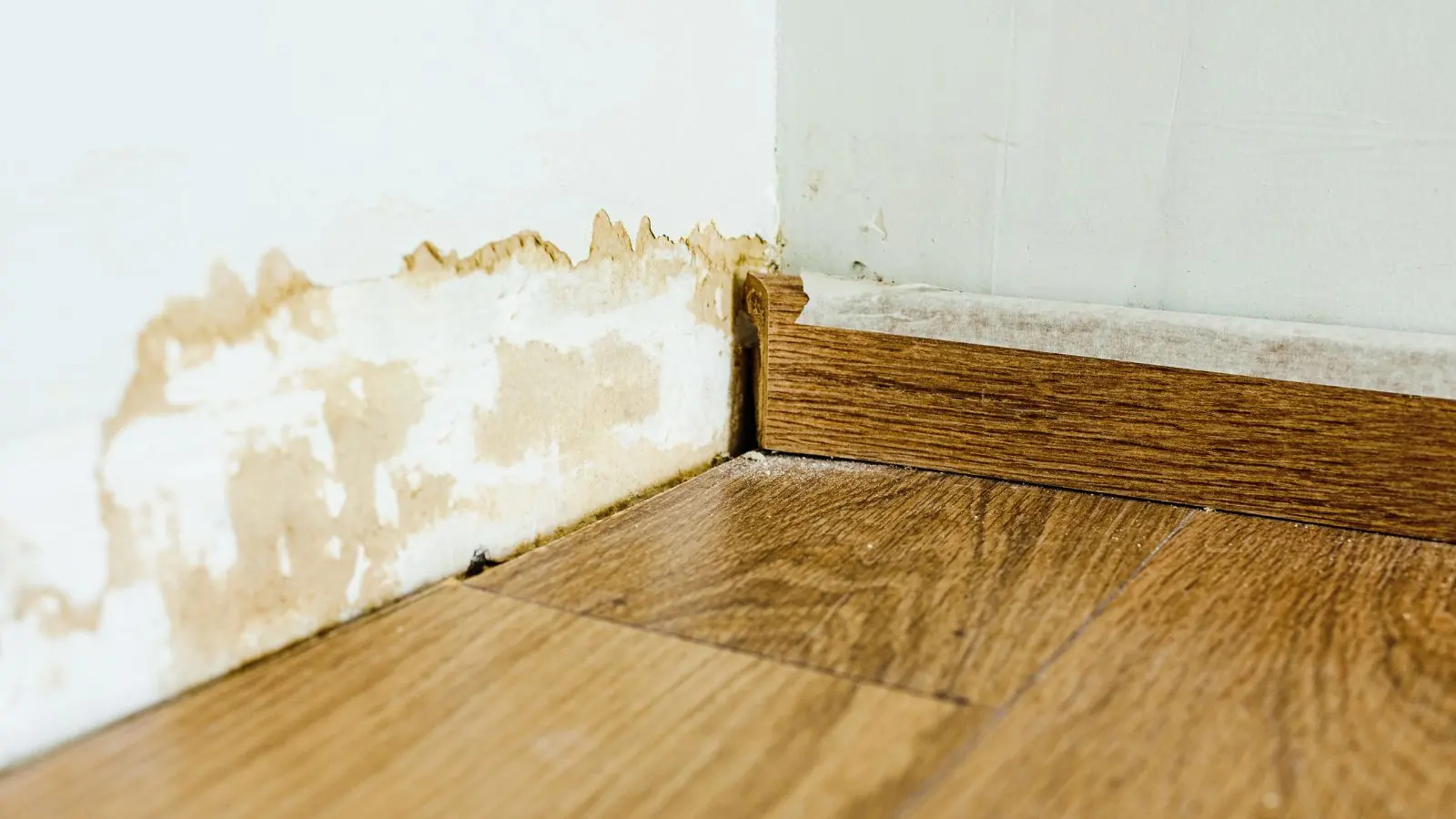
Water damage wall repair starts with finding where the water went, because the stain on a wall is rarely where the leak is. Water follows framing, pipes and gaps, then shows up lower or farther away. A proper repair finds the source, maps the wet area, dries the cavity and only then rebuilds the wall.
Interior walls and exterior stucco walls fail differently. Inside, the usual culprit is a supply line or fixture. Outside, water enters at windows, roof lines and cracks, then hides behind the finish where nobody sees it.
This guide compares the two, explains moisture mapping and lays out how each kind of wall is repaired.
Wall types and how each one is handled
| Wall type | Typical sign | How the water is found | Repair path |
|---|---|---|---|
| Interior wall with a supply line leak | Stain or soft spot low on the wall, swollen baseboard, damp smell | Moisture meter scan, thermal camera, access opening near the pipe | Open the cavity, fix the line, dry, replace the panel, finish |
| Interior wall under a bathroom or kitchen | Bubbling paint, loose tile, staining on the floor | Readings tracked room to room | Dry and rebuild the wall, often with the flooring |
| Exterior stucco wall | Staining at windows or roof lines, cracks, bulging or a hollow sound | Probe meter, thermal imaging, check of flashing and penetrations | Find the entry point, dry the cavity, patch lath and paper, re-stucco and match color |
| Shared wall between units | Damp neighboring unit, repeating stain | Readings on both sides | Repair the source and dry both sides |
| Wall behind cabinets or appliances | Musty smell, hidden damage | Pull-away access and scanning | Move the cabinet or appliance to open and dry the wall |
Start with moisture mapping
Moisture mapping means taking meter readings across the wall in a grid, marking the wet boundary and repeating the readings each day. A thermal imaging camera helps because wet areas cool as the water evaporates, so they show up on the screen as darker patches.
The map answers three questions. How far has the water traveled, is it still spreading and is the drying working. Without it, a patch is a guess. With it, the crew knows where to open the wall and when it is safe to close it.
Supply line leaks inside interior walls
A slow weep from a fitting can saturate the bottom of a wall for weeks before anything shows. Telltale signs include a baseboard that has swelled, paint that bubbles low on the wall, a damp or musty smell and a floor that feels slightly soft near the wall.
If you can hear or see active water, shut off the main valve and call for emergency water removal. If the leak is old and slow, shut off the line serving the fixture and have the wall opened at the pipe. Insulation in the cavity holds water against the back of the panel, so wet insulation should come out.
Exterior walls and stucco
Stucco is hard and looks watertight, but water gets behind it at window edges, where the roof meets a wall, around pipes and through cracks. Once behind the finish, it can sit in the paper and framing without showing.
Because the finish hides the damage, crews probe with a meter and check the flashing and penetrations. If the cavity is wet, it must dry before it is closed. The repair removes the failed section, restores the lath and weather barrier, applies new stucco and blends the color. Stucco needs time to cure before it is painted, so the finishing stage takes longer than a drywall patch.
Stain on a wall and no idea where the water came from? Call the 24/7 line and describe what you see.
☎ (760) 769-1159Safety around wet walls
Wet walls hide electrical and structural problems. Keep these in mind until a crew has looked.
- Shut off power at the breaker panel if water is near outlets, but only if you can reach the panel while standing on dry ground.
- Do not cut into a wall that may contain wiring or pipes without knowing where they run.
- Keep children and pets away from soft or bulging walls.
- Photograph the wall before anything is opened so the damage is documented.
- If the water came from a storm or floodwater, treat it as contaminated and call for flood damage restoration.
Do not close the wall too soon
A wall can feel dry on the surface while the cavity is not. Closing it early traps moisture, and the problem returns as a stain, a smell or a soft spot months later. The rule is simple. The meter says dry, then the wall closes.
After drying is confirmed, the rebuild proceeds under water damage repair: insulation, new panel or lath, finish and paint. Water mitigation is the stage that keeps the rebuild small by saving the framing and any dry material.
The approach is the same for homes in Thermal and La Quinta, though exterior finishes and wall types vary from one property to the next.
Wall damage in Indio: local notes
The City of Indio's storm page offers advice that applies directly to walls. Stack sandbags by doors and other low points where water could enter your home, and shut off electricity at the breaker panel if water rises near outlets. Water that enters at a door threshold wicks into the bottom of the wall, so low points matter as much as roofs.
Indio has seen real flood damage. A FEMA public notice describes how Tropical Storm Hilary's floodwaters in August 2023 eroded the Coachella Valley Stormwater Channel and damaged a city water main. Storm water that reaches a home counts as contaminated, and walls it touches need professional assessment.
The City of Indio says a building permit is required before work begins, and its list of exemptions is short and covers items such as low fences and small sheds. Ask the Building and Safety Division whether replacing a wall section or re-stuccoing needs a permit.
Frequently asked questions
Crews use a moisture meter and a thermal imaging camera to scan the surface, then confirm with a probe or a small access opening. The readings show where the wet area starts and stops, which limits how much of the wall has to come out.
Yes, once the cavity behind it is dry. The failed section is removed, the lath and weather barrier are restored, new stucco is applied and the color is blended. The entry point has to be fixed too, or the water will return.
It depends on the material, the amount of water, the humidity and the equipment. Crews check readings daily and close the wall only when the meter confirms it is dry, instead of working to a fixed number of days.
No. It can also come from water entering at an exterior wall, a door threshold, a window edge or the floor. Moisture mapping and a check of both sides of the wall separate a plumbing leak from outside intrusion.
The City of Indio says a building permit is required before work begins, with some exemptions that are mostly low fences and small sheds. It does not publish a rule specific to water damage repair, so call the Building and Safety Division to confirm what your wall repair needs.